Loading blogs...

By David Newdawn
25th August, 2026
That may sounds like something you would say after two cups of coffee and a very productive day, but it actually represents three companies that have recently raised serious money: Moove, Moment and Lovable.
Three different companies. Three very different problems. Three different markets. And three founders or founding teams who have managed to convince investors that what they are building is worth betting hundreds of millions of dollars on.
So, rather than just looking at the headlines and saying, “Another startup has raised money,” let’s take a closer look at what these companies are actually building, who is behind them and, more importantly, what their stories can teach founders building from wherever they are.
Let’s start with the one that should probably make Nigerian founders pause for a second.
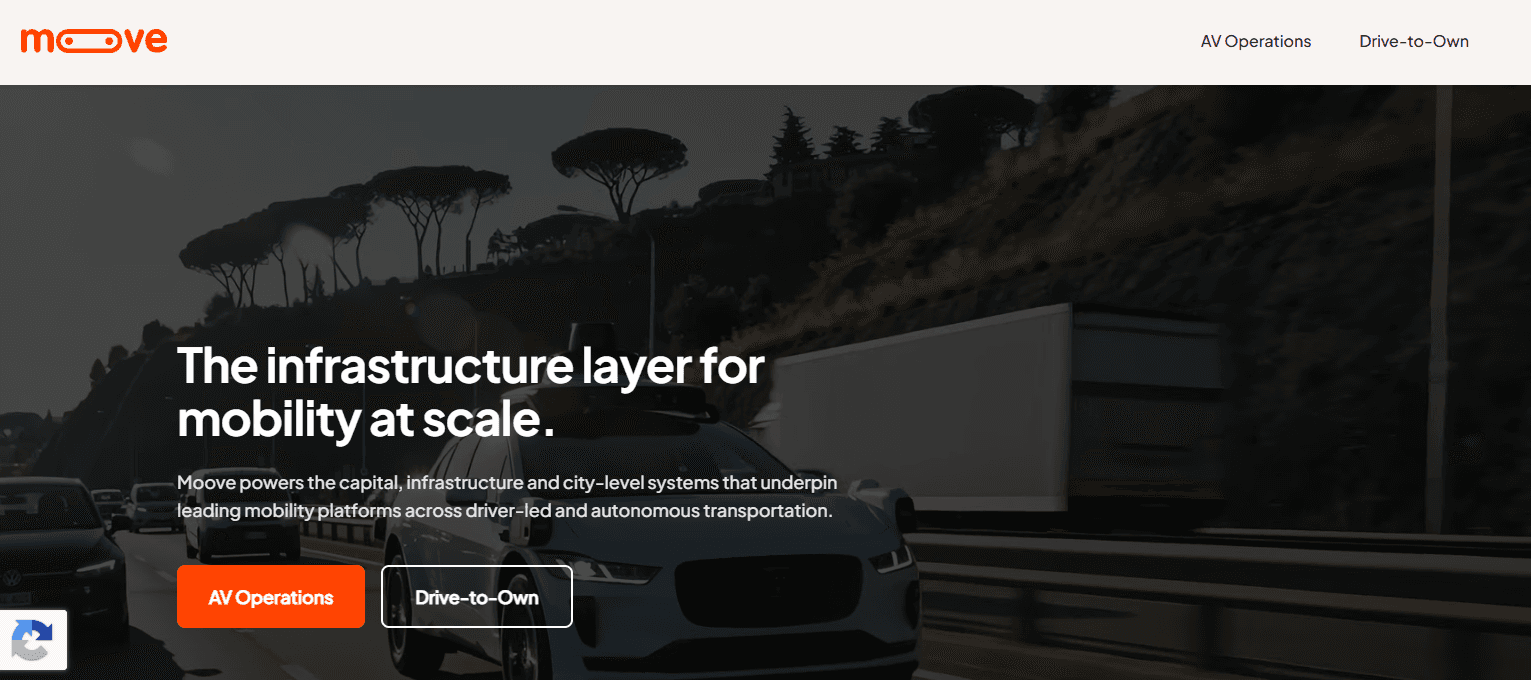
Moove recently raised $250 million in Series C funding, pushing its valuation to about $2.1 billion and officially making it a unicorn. The round was led by Tiger Global, with participation from existing investors including Uber, Mubadala, BlackRock and Prosus Ventures. The company says the new funding will support its autonomous vehicle business, AI capabilities and international expansion.
But here is the part I find more interesting.
Moove did not start with robotaxis in America. It started in Lagos, solving a very Nigerian problem: drivers wanted to work with platforms like Uber, but many could not access the financing required to own a vehicle. So founders Ladi Delano and Jide Odunsi built a revenue based financing model around the actual earnings of mobility entrepreneurs. In simple terms, instead of asking, “Does this driver have the traditional credit history that a bank wants?” Moove looked at the person’s ability to generate income.
And the founders themselves are worth paying attention to. Delano and Odunsi are British born Nigerians, with backgrounds spanning entrepreneurship, investment banking and management consulting. Delano had already built businesses before Moove, while Odunsi had worked at Goldman Sachs and McKinsey. So this wasn’t simply two people waking up one morning and deciding, “Let’s finance some cars.” They brought different experiences to a very specific problem.
What makes the story even more interesting is where Moove has ended up. The company that started by helping drivers get vehicles in Lagos is now involved in the infrastructure behind autonomous mobility in the United States, including working with Waymo on robotaxi fleet operations. Moove is building the physical infrastructure, charging and fleet operations needed to keep autonomous vehicles moving.
That is a serious journey.
And perhaps the biggest lesson here is that you don’t always have to start by solving a global problem. You can start by solving a problem you understand deeply.
Moove started with access to vehicle ownership. The market changed. The company evolved. And the same infrastructure it built around mobility has now opened the door to autonomous vehicles.
Sometimes, the small door you start with leads somewhere much bigger.
Now let’s talk about Moment.
If you have never heard of Moment before, don’t worry. You are probably not alone. It isn’t the kind of startup you see every day on social media with someone announcing, “We are disrupting the future of finance!” with a picture of themselves holding a coffee.
Moment is building something much less flashy but extremely important: an AI operating system for investment management.
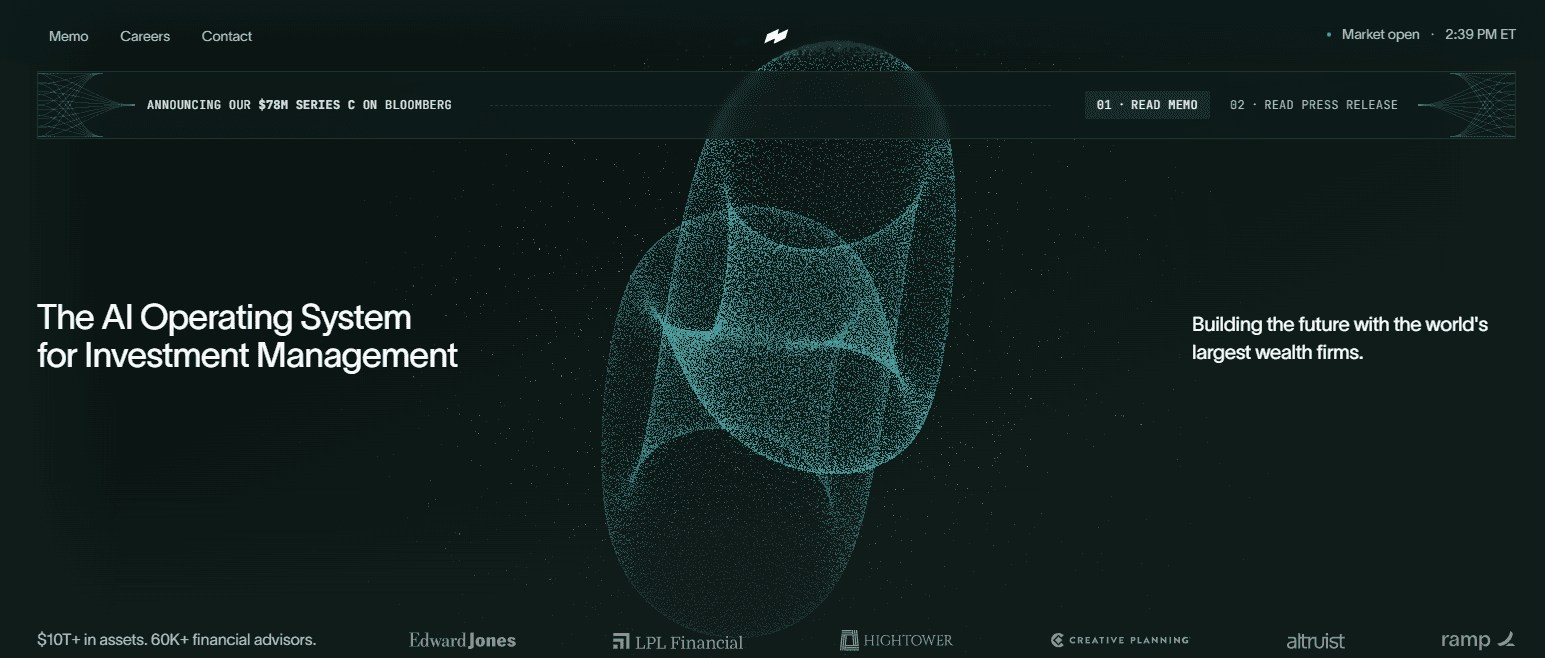
In May, the New York based company raised $78 million in Series C funding, led by Index Ventures, with participation from Andreessen Horowitz, Avra and existing investors. The interesting part is how quickly this happened. Less than ten months earlier, Moment had raised a $36 million Series B, also led by Index.
The company was founded by Dylan Parker, Dean Hathout and Ammer Soliman, three Harvard friends who went on to work in quantitative finance. Parker and Hathout worked at Citadel, where they helped build an automated credit desk, while Soliman brought experience from McKinsey. They weren’t outsiders looking at financial markets from the outside. They had actually worked inside the system they were trying to rebuild.
And this is one of my favourite parts of their story.
They looked at one of the world’s biggest financial markets, saw that a lot of the infrastructure was still fragmented and manual, and decided to fix it.
Not necessarily something that would make your friends say, “Wow, this is the next big consumer app.” But something valuable.
Moment’s platform brings together trading, research, portfolio construction, reporting and compliance. Today, the company says it works with firms managing more than $10 trillion in client assets, up from about $300 billion less than 18 months earlier. Customers include major firms such as Edward Jones, Hightower and LPL Financial.
There is a lesson here for founders.
You don’t have to build something that looks exciting. You have to build something that is valuable.
Sometimes the biggest opportunity is hiding inside the boring process everyone has complained about for years.
You know that annoying thing everyone in your industry says, “That’s just how we do it”.
Maybe that’s the startup.
One more before you leave, this will probably blow your mind.
And then there is Lovable.
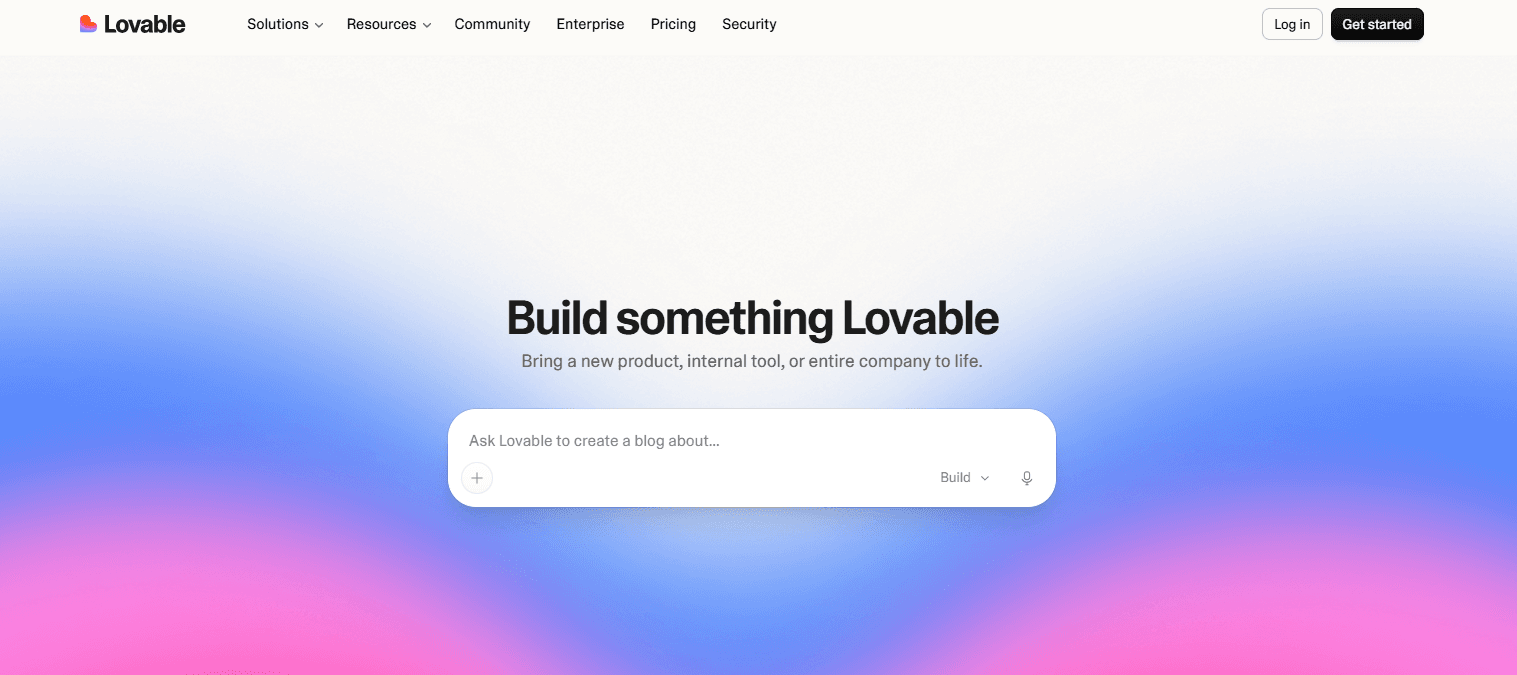
Lovable is probably the easiest one to explain. You tell it what you want to build in plain English, and AI helps you turn that idea into an actual application or website.
Basically, you can walk into Lovable with an idea and say, “I want a platform where founders can...” and instead of spending three months looking for a technical co founder, you can start building.
That idea has clearly resonated.
On August 12, Lovable announced a $400 million Series C funding round led by Menlo Ventures and the Scaleup Europe Fund managed by EQT. The round valued the Swedish company at $13.3 billion, roughly double its $6.6 billion valuation from December 2025. Lovable says more than 60 million projects have been created on the platform.
But the founder story is probably even more interesting than the funding.
Lovable was co founded by Anton Osika and Fabian Hedin. Osika is a physicist who previously worked at CERN, became the first engineer at Sana Labs and later co founded Depict.ai. Before Lovable became Lovable, Osika had already been experimenting with AI generated software through GPT Engineer, an open source project that gained significant attention among developers.
So the idea didn’t just appear because AI became popular. There was already a long trail of experimentation behind it.
And that is something founders can easily miss when they look at a startup that suddenly seems to explode overnight. We see the $400 million round. We see the $13.3 billion valuation. We see millions of projects.
We don’t always see the years of experience, failed experiments, technical knowledge and previous companies sitting underneath the headline.
Lovable’s bigger bet is also interesting. It isn’t simply saying, “We want to make coding easier.” Its mission is much bigger: give the ability to create software to people who traditionally could not code. The company says its users include major organisations such as Adidas, Nvidia and Deutsche Telekom, alongside individual builders and startups.
And perhaps that is the biggest lesson from Lovable.
Sometimes the opportunity is not to make an existing expert 10 percent better. It is to give millions of people access to something they previously couldn’t do.
That changes the size of the market completely.
Look at these three companies, They are solving real problems.
And that is probably the part founders should pay the most attention to.
The funding is exciting. The valuations are exciting. Seeing Nigerian founders building globally is exciting. Seeing AI companies raise hundreds of millions is exciting.
But the cheque is not the story.
The problem they solved is the story.
Because investors can fund a company, but you cannot manufacture a genuine problem, a strong solution or a founder who is stubborn enough to keep building when nobody is paying attention.
So if you are building right now and your startup is nowhere near a $250 million, $78 million or $400 million funding announcement, relax.
You are not late.
Just make sure you are building something worth noticing.
This is Startup Update from TheSpotlighthub, where we don’t just tell you who raised money. We look at what they are building and what the rest of us can learn from it.
On 25 September 2026, we are launching the TheSpotlightHub website during our upcoming webinar, Build to Scale, to answer the following questions.
A conversation for founders on building products with purpose, taking them to market, navigating investment and thinking about the future.
Save the date. Something exciting is coming.
Until the next time on Startup Update, Keep building and keep learning.
Category
Startup Update and Tech News
