Loading blogs...

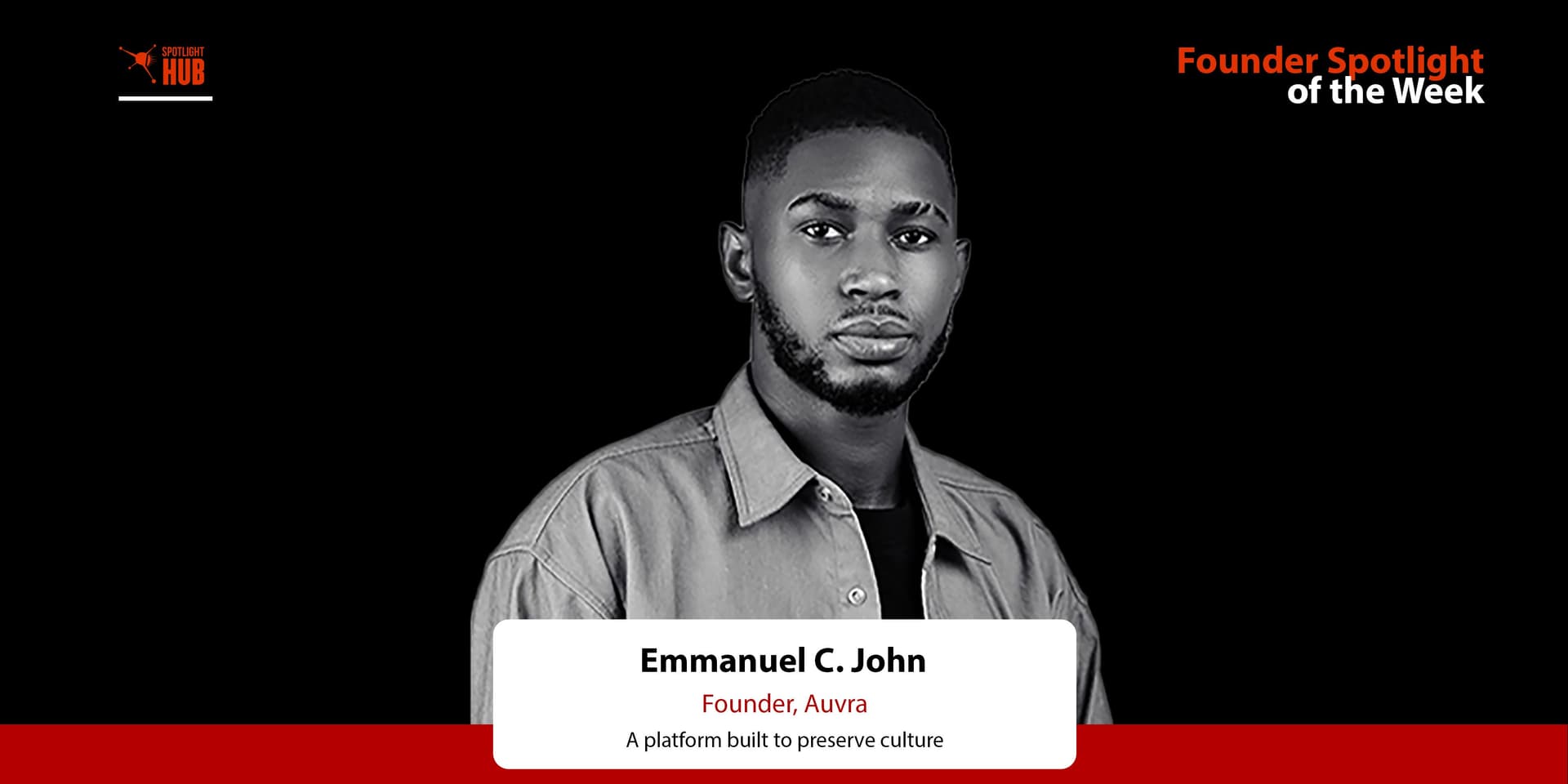
By David A. Newdawn
1st July, 2026
Discover how Emmanuel John is building Auvra, an AI and blockchain platform preserving African culture, languages, traditions, and family history
What if the next African unicorn isn’t solving payments, but preserving culture?
Most founders chase trends. Emmanuel C. John is building something different.
In this edition of TheSpotlightHub Founder Spotlight, we had an interesting conversation with the founder of Auvra to discuss why he believes Africa’s disappearing languages, stories, and cultural heritage deserve world-class technology.
From the failure of his first startup to building Auvra with AI and blockchain, Emmanuel shares lessons on startup failure, product design, team building, fundraising, validation, and why founders should build companies that will still matter 100 years from now.
If you’re a founder, product builder, startup enthusiast, or simply curious about the future of African innovation, this is an interview you shouldn’t miss.
My background is in Glass and Ceramics. I am a trained ceramicist. While studying, I noticed something that kept bothering me. Many of the techniques my supervisor and other master craftsmen had spent decades learning were never documented. They simply existed in people’s memories.
It made me ask a simple question: What happens when these people are gone?
The same applies to our languages and traditions. Reports already show that many African languages are disappearing. When a language disappears, it is not just words that are lost. You lose the stories, the customs, the knowledge, and an entire way of life.
That was the beginning of Auvra. I wanted to build a platform where families, communities, creators, and even governments could permanently preserve their cultural heritage, instead of leaving it scattered across WhatsApp chats, Facebook posts, or devices that eventually disappear.
Before Auvra, I built a payment platform called Ewalletly.
Looking back, the biggest mistake was not even technical. It was people. The team did not truly share the same vision. Everyone was working, but not everyone believed in what we were building. When challenges came, commitment disappeared.
We also partnered with another payment company whose transaction charges made our business almost impossible to sustain. Every transaction meant losing money.
That experience taught me something I still carry today. You do not just recruit talented people. You recruit people who genuinely believe in the mission. If your team does not share the vision, your startup becomes much harder than it needs to be.
I taught myself.
When we started, I didn’t wait for someone to come and design the product for me. I learned product design myself, researched users extensively, and ended up creating nearly 380 product screens before bringing in additional support.
For me, product building is about understanding people first. You cannot build a product by guessing what users want. You have to talk to them, understand their problems, and keep improving based on what you learn. I also believe founders should move quickly.
I’d rather fail fast, learn, and improve than spend ten years trying to perfect an MVP.
One of my biggest challenges was trusting too quickly.
At one point, I handed engineering responsibilities to someone I believed could lead the development.
Unfortunately, communication became poor, deadlines were missed, and development slowed down significantly. Eventually, I had to step back into the engineering process myself and rebuild parts of the team.
That experience completely changed how I recruit people today. Talent matters. Communication matters even more.
Yes. One of our earliest users lives in the diaspora.
She had lost important family memories and realized there was no dedicated platform where those memories could have been preserved permanently.
Auvra
Listening to her experience made me realize that the problem wasn’t theoretical. It was real. People were already losing parts of their family history. That conversation gave me confidence that Auvra was solving something meaningful.
Around the same period, we were accepted into programs like NVIDIA Inception, ElevenLabs, and the Claude Startup Program, which gave us infrastructure support and AI credits.
Those opportunities didn’t just provide resources. They validated that we were building something worth investing in.
Right now, we’re using APIs like Claude because they’re available through startup programs. But that’s temporary. In the long term, we want Auvra to have its own foundational AI model.
Building your own model is difficult, expensive, and takes time. But if your vision is to build something that lasts fifty or one hundred years, you cannot depend entirely on another company’s technology.
We want to own the core intelligence behind our platform. That’s how you remain relevant over decades.
Trust is everything.
People won’t preserve their family history on your platform unless they believe it will still exist years from now. That’s why we’re working on a long-term storage partnership that guarantees preservation for over one hundred years.
When someone stores something on Auvra, we want them to know it isn’t disappearing because a company shut down or a phone got lost. That’s the confidence we want to give people.
Growth isn’t just about downloads. Our goal is to build an ecosystem.
We’re introducing digital identities so every user has a persistent identity they can use across countries. We’re building community-driven adoption instead of relying heavily on advertisements.
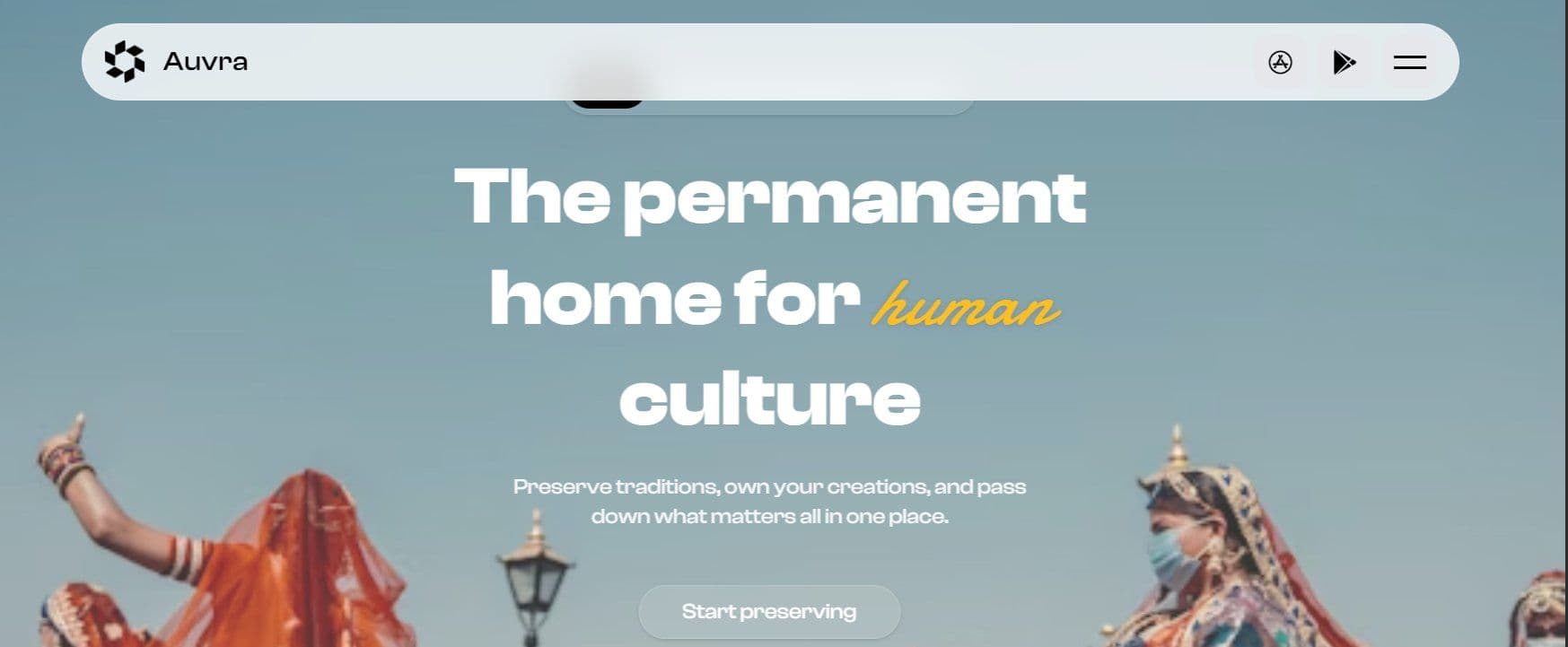
We’re engaging governments, museums, and national institutions because cultural preservation cannot be done by startups alone. Right now, we have around one hundred Nigerian testers.
Our immediate goal is to grow that to about five hundred before public launch.
We’re also preparing for collaborations with federal programs where participants will automatically join Auvra as part of the initiative.
Money is important!
Every company needs revenue. But I believe founders should first understand the economics of their own business before outsourcing that responsibility.
That’s why I’m currently handling our financial calculations myself. I want to understand our unit economics completely before hiring a CFO or COO. As founders, we shouldn’t blindly depend on reports.
We should understand how our businesses actually make money.
Live the problem.
If you haven’t experienced the problem yourself or deeply understood the people facing it, it becomes difficult to build the right solution.
You should be able to explain your problem clearly enough that someone else immediately understands why it matters.
That’s how you attract customers.
That’s how you attract partners. That’s how you attract investors.
People don’t invest in products. They invest in problems that are worth solving.
Throughout our conversation, one idea kept resurfacing. Emmanuel isn’t building Auvra to chase trends or short-term growth. He’s building infrastructure he hopes will still preserve African stories, languages, and identities a century from now.
Whether discussing product design, AI, team building, or startup failures, his philosophy remained consistent:
“Build something that outlives you.”
It’s a reminder that some of the most meaningful companies aren’t simply solving today’s problems; they’re preserving tomorrow’s history.
_____________________________________________________________________________
Building anything meaningful takes clarity, patience, and the courage to keep showing up even when things are uncertain. At TheSpotlighthub, we’ll keep sharing stories and insights from people who are building relevant products and solving real problems.
Until next time, keep learning and keep building what matters.
Category
Founder's Spotlight