Loading blogs...

By David A. Newdawn
15th June, 2026
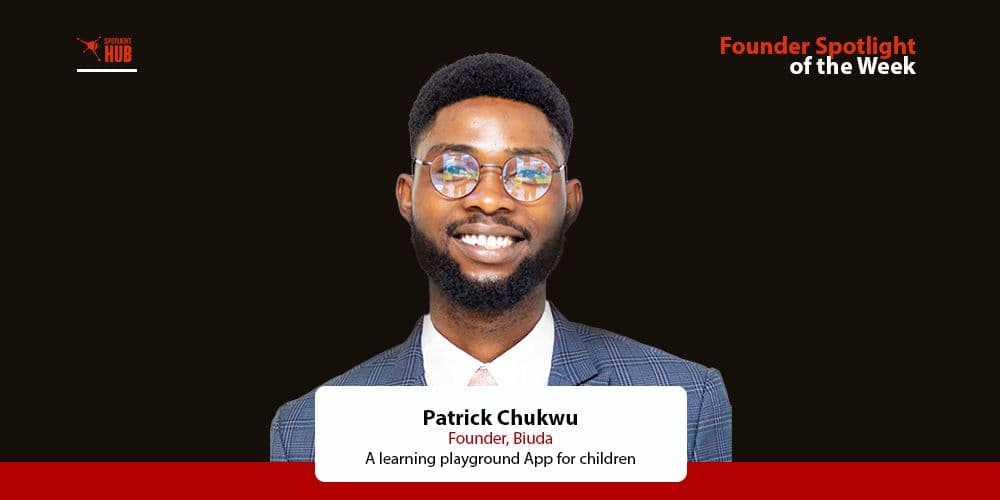
In our recent Founder’s Journey conversation, we had an interesting conversation with Patrick Chukwu, the co-founder of Biuda, to discover how he is redefining education for young children through his platform.
A child sits through a lesson, present but disconnected, moving from one session to another without any real sense of engagement. For many families, learning has become something to manage rather than something to experience.
Parents try to compensate in the only ways they know how: extra lessons, different tutors, and more structure; yet the outcome rarely changes in a way that feels meaningful. The system continues, but the connection is missing.
Patrick has spent more than a decade inside that reality, not as an observer but as someone deeply involved in it. “I’ve been working with children for over a decade,” he says, and there is a quiet weight to that statement, the kind that comes from repetition, from seeing patterns long enough that they stop being coincidence.
Over time, what stood out to him was not just that students struggled, but that when the learning experience was intentionally designed, something shifted. “When the learning experience is right, children improve. Not just a little; you see real change.” It wasn’t theory. It was something he had watched happen again and again.
That realization didn’t immediately become a product. It stayed, at first, as a question.
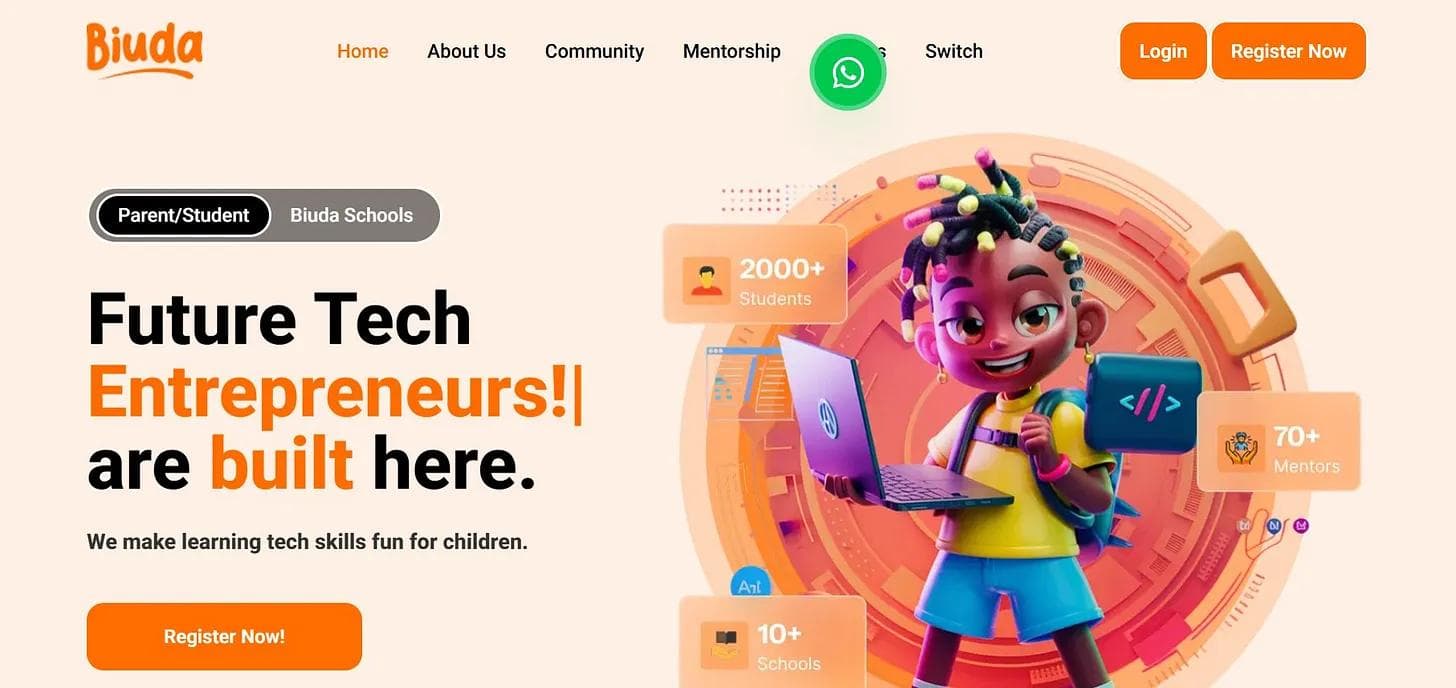
Before BIUDA existed, there were smaller steps that led to it: teaching sessions, structured programs, and eventually something more organized in the form of Integrated Academy.
Each step added clarity. Each interaction with students reinforced the same pattern: children responded differently when learning felt engaging rather than forced. What he was building wasn’t just helping students pass; it was changing how they interacted with learning itself.
The turning point came in a way that many founders recognize quietly, almost casually, but with lasting impact.
“A parent actually told me, ‘What you’re doing with my child, more people need this.’”
It wasn’t a pitch. It wasn’t validation in the traditional startup sense. But it carried something more important: evidence that the impact could extend beyond a single classroom.
That moment didn’t create BIUDA overnight, but it changed how Patrick saw the work. Teaching was no longer just delivery. It was a system that could be scaled.
When BIUDA began to take shape, it wasn’t positioned as just another edtech platform. It was built around a more deliberate idea, something Patrick describes as “a gamified learning playground,” a space where children could learn, grow, and stay engaged over time, rather than moving from one disconnected learning experience to another.
The vision was not short-term. It was designed to follow a child’s journey, from early learning stages into more advanced development, creating continuity where there was previously fragmentation.
“We didn’t just want to teach,” he explains. “We wanted to build something that children can grow with, something that becomes part of their learning journey over time.”
Like most early-stage products, the first version of BIUDA was built on assumptions that felt reasonable at the time. The team combined human instructors with 3D animation, trying to balance familiarity with innovation.
On the surface, it worked. The content was structured, the delivery was functional, and there was early traction. But something about it still felt incomplete, not broken, but not fully aligned with how children actually engaged.
Instead of pushing forward, the team paused and returned to what had guided Patrick from the beginning: observation.
“We tested with children, parents, teachers, everyone,” he says, almost matter-of-factly, but that sentence carries the weight of intentionality. The process wasn’t quick. It involved listening, watching, and paying attention to how children responded in real situations.
And what they found was difficult to ignore.
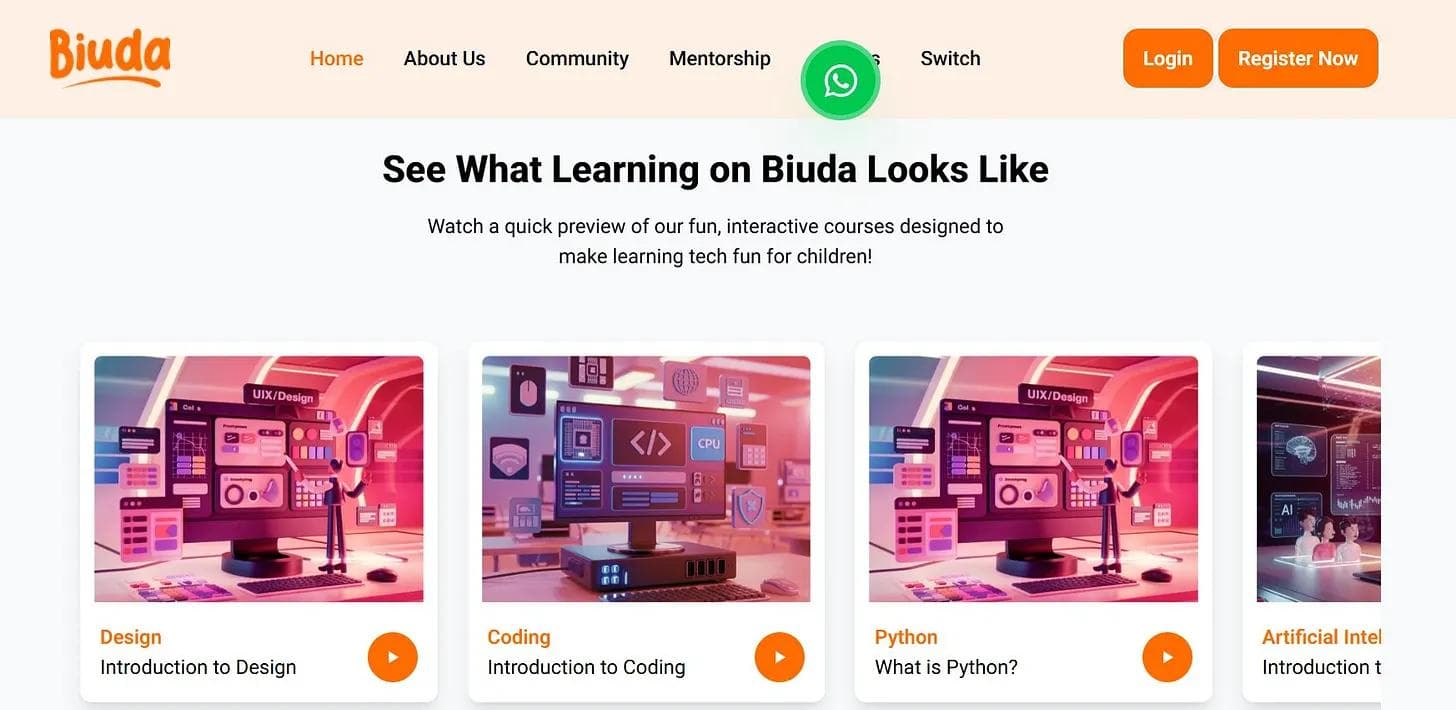
Children didn’t just prefer animated content: they connected with it in a way that was deeper and more sustained.
That insight led to a decision that required letting go of the original approach.
“It was clear we had to pivot,” Patrick says. “Not because the first version didn’t work, but because we saw something that worked better.”
The transition to fully animated, immersive learning experiences wasn’t cosmetic. It was foundational. It changed how content was created, how engagement was measured, and how the product would evolve moving forward.
Building BIUDA has not been about assembling the most convenient group of people but about finding individuals who genuinely believe in the problem being solved.
Patrick speaks about this with a kind of grounded honesty that doesn’t try to romanticize the process. “We’ve had people leave higher-paying jobs to join us,” he says. “Not because of what we’re offering financially, but because they believe in the vision.”
That belief creates a different kind of commitment. It shapes how people show up to the work, especially in moments when progress is slow or uncertain. It also changes what leadership looks like.
“In the beginning, you think building is about the product,” he reflects. “But as we started to grow, I realized it’s really about people.”
That shift from product to people required him to develop skills that weren’t part of the original plan. Communication became essential. Empathy became necessary. The ability to manage and grow a team became just as important as building the platform itself.
There is also a quiet realism in how Patrick approaches the idea of balance, something many founders struggle to define.
“Work-life balance is a mirage,” he says, without hesitation. “What you’re really doing is harmonizing priorities.”
It’s not a statement of defeat but of clarity. Building something meaningful requires trade-offs, and pretending otherwise doesn’t make those trade-offs easier.
Instead, he focuses on making conscious decisions, understanding what matters at a given moment, and accepting that balance is not static.
That perspective carries into how he thinks about building in general.
The team’s approach to research has been deliberate and ongoing, engaging with parents, teachers, school owners, and children themselves to understand not just what works but why it works. This continuous feedback loop has shaped the evolution of the platform, ensuring that decisions are grounded in real-world use rather than assumption.
It is this approach that has started to translate into tangible signals. Early programs like Biuda Kids have seen strong engagement, particularly through platforms like YouTube, indicating that the model resonates with its audience.
Beyond that, opportunities are beginning to emerge at a larger scale, including partnerships and conversations with educational institutions and government bodies. The recent training of teachers and the potential to impact tens of thousands of students point to a direction that is becoming increasingly clear.
Still, Patrick is careful not to frame these as endpoints.
“The vision has always been impact-driven,” he says. “Income will come, but the focus is on building something that actually works.”
If there is one theme that runs consistently through his journey, it is structure.
Not in the rigid, corporate sense, but as something necessary for survival.
“A lot of founders don’t fail because the idea is bad,” he explains. “They fail because there’s no structure, no clear expectations, no defined roles, and eventually, fatigue sets in.”
It’s a lesson learned not just from observation but from experience. Building something over time requires systems that can support both the work and the people doing the work. Without that, even the strongest ideas struggle to last.
So his advice to early-stage founders is direct:
“Choose your co-founders carefully. Make sure your strengths complement each other. Put expectations and equity in writing early. And build a structure that can carry the vision long-term.”
There is no sense of finality in how Patrick talks about it, only progression. The product continues to change, the team continues to grow, and the understanding of what works continues to deepen.
But at its core, the idea remains simple.
Learning should not feel like something children endure.
It should feel like something they engage with, explore, and grow into over time.
And sometimes, the most meaningful things founders build don’t come from trying to invent something entirely new. They come from paying close attention to what already exists, noticing where it falls short, and committing patiently and consistently to building something better.
— TheSpotlighthub
Category
Founder's Spotlight