Loading blogs...

By Glory temitope
2nd September, 2026
Click send, get thanks in ten seconds. That is exactly the narrative Sendcoins is built around. Whether you are transacting in fintech or blockchain, you don't need to move around multiple apps to get it done.
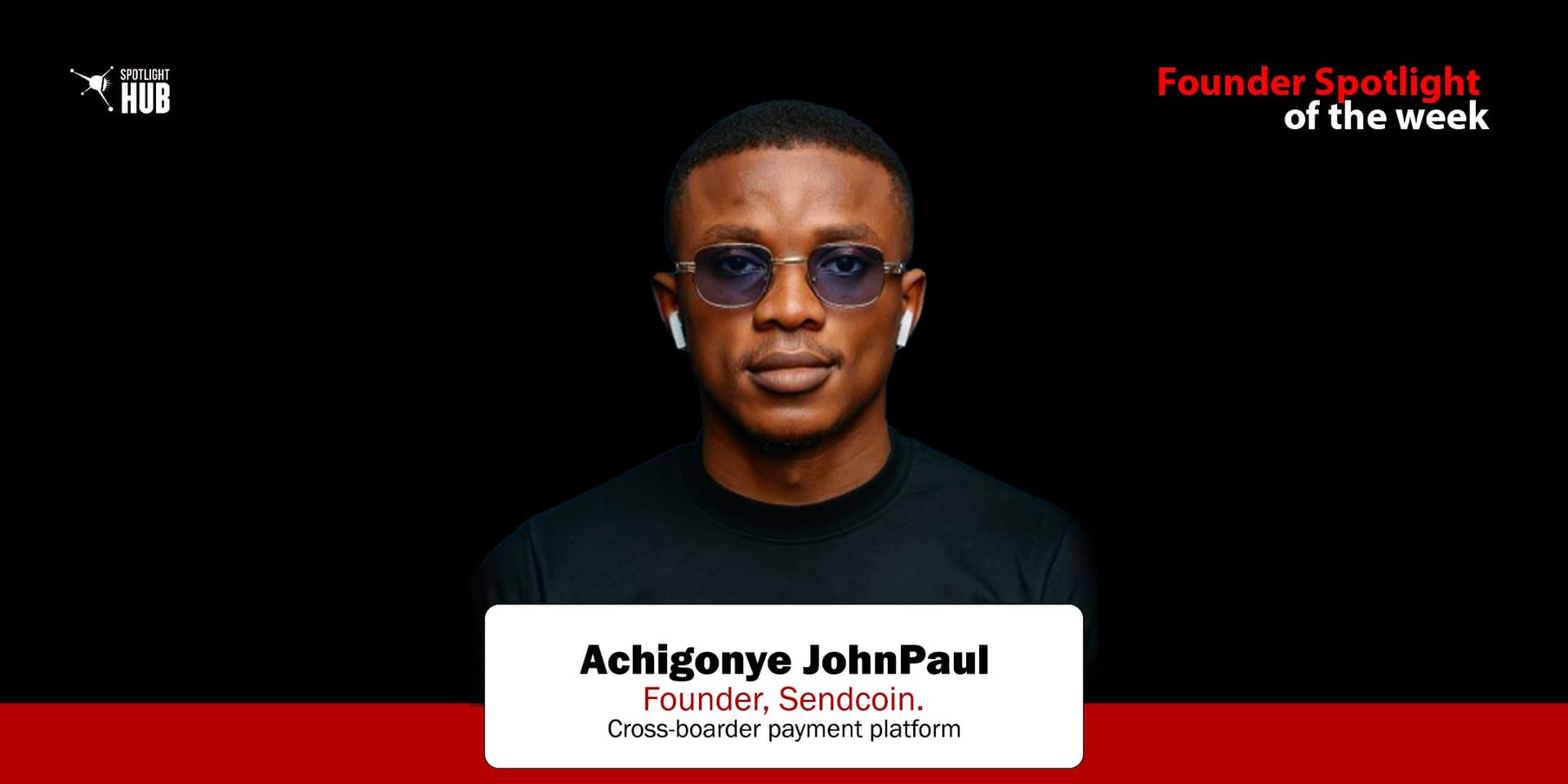
Money should not know borders, yet for millions of immigrants, students, and freelancers moving between continents, every transfer comes with a tax of time, fees, and friction. Achigonye Johnpaul set out to dissolve that friction.
His company, Sendcoins, uses stablecoins to move money across Canada, the UK, Southeast Asia, and Africa, faster, cheaper, and without the usual borders that finance likes to draw in the past.
In this conversation with the Spotlighthub Team, Johnpaul unpacks the trust battles of building a cross border fintech, the discipline of compliance, and the hard earned skills no one tells early founders they will need. This is a special episode for Fintech founders.
Johnpaul introduced himself as the founder of Sendcoins, a company built to help immigrants, workers, international students, freelancers, and businesses across Canada, the UK, Southeast Asia, and Africa send money across borders using stablecoins. The goal, he said, is making transactions easier, faster, and cheaper for people who are too often let down by conventional transfer options.

He was quick to point to proof over promise, noting that Sendcoins has already facilitated a significant volume of transactions and that the market has been validated by real usage, not just ambition.
"We are helping immigrants, workers, international students, freelancers, businesses across the board send money across borders using stable coins, facilitating transactions, making it easier, faster, and cheaper for them."
Johnpaul didn't hesitate naming the first real obstacle Sendcoins faced: globalization itself. At the early stage, he explained, it was genuinely difficult to earn people's trust, both from partners and across international markets, simply because the product was new and unproven.
Compliance and regulation made the climb steeper still. Getting that right, he said, was one of the first things the team had to nail down, jurisdiction by jurisdiction, before anything else could move forward. The way through, in the end, was partnering with organizations that had already spent years building the trust Sendcoins didn't yet have, and borrowing credibility while earning their own.
"Compliance and regulation play a very big role. We were able to navigate the trust by getting some couple of partners who are now trading on the trust that they have built over time."
Johnpaul was quick to correct an assumption before answering: he is not a solo founder. He's simply the one pushing the business publicly, while other business partners hold real skin in the game alongside him. But his answer on teamwork went deeper than structure, it was about temperament.
Working with a team, he said, means working with humans, some of whom won't have the depth of experience you do, and that demands patience.
It also demands a willingness to keep learning even while you're the one teaching. But patience has a limit, he added, and reading people's energy matters just as much as managing their output.
"Know the kind of energy your team works with that best suits you. You should welcome twenty percent of negativity and then also eighty percent of positivity, because that's gonna help improve the team."
Asked what he had to learn beyond the technical side, Johnpaul went straight to tenacity. Building, he said flatly, is very hard, and grit, the refusal to give up, is a skill in its own right, not just a personality trait.
But the skill he circled back to mostly was communication. At the early stage, before a product has any real validation, your ability to communicate your vision is often the only thing you actually have.
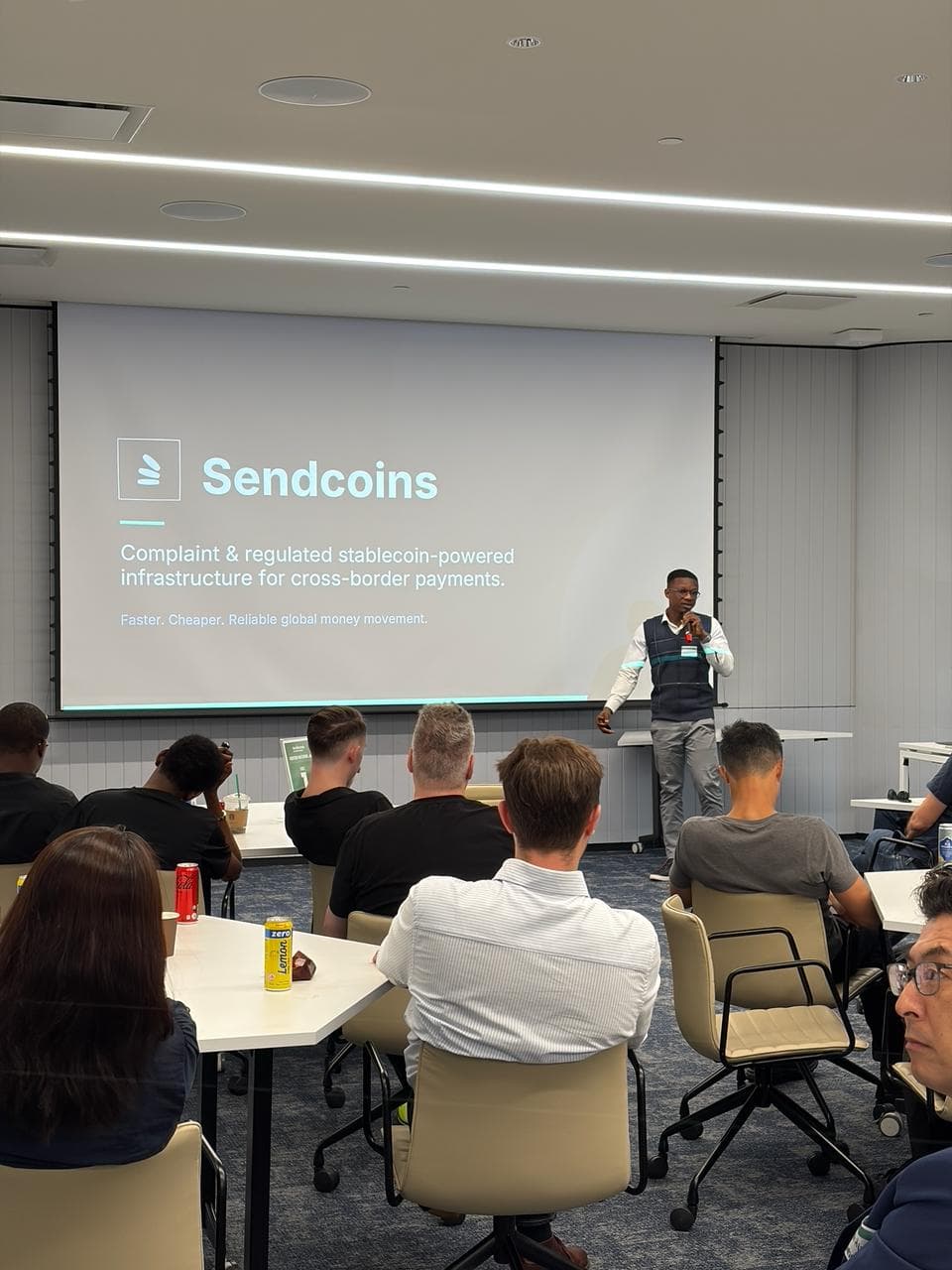
He tied this directly to investor relations, partnerships, and team alignment, arguing that founders who underestimate communication do so at their own cost.
"You don't have any validation, there is no verification or anything on the founder. The best what you have is your ability to communicate. And depending on how well you are able to use that, it will either make you or mar you."
Johnpaul's second major skill was multitasking, not as a badge of honor, but as a survival requirement. Early founders, he explained, need to wear enough hats to understand every part of the business, because you genuinely cannot delegate something you have no basic grasp of.
He was careful to clarify this wasn't a call for every founder to become a programmer. Even a non-technical founder, he said, needs just enough understanding of a product's technical requirements to communicate with the team and catch when something is being mishandled.
For Johnpaul himself, this wasn't theoretical, he is technically trained, and personally wrote Sendcoins' initial code before the team scaled up with hired developers.
"You can't delegate what you don't know how to do. At least you should have an idea. You're not expected to be an island of knowledge, but the basic idea really matters."
When asked what sets Sendcoins apart, Johnpaul pointed to three things at once: real market experience, the regulatory compliance the team fought hard to establish, and the ability to fuse financial technology with blockchain technology inside a single platform.
He explained that every user gets a permanent Naira account alongside a stablecoin wallet, letting them spend from either at the same time, no juggling between separate apps for fiat and crypto.
A Nigerian user, he noted, can send Naira and have someone in Canada receive Canadian dollars, or someone in Singapore receive Singapore dollars, cheaper and faster than conventional routes. Sendcoins, he added proudly, is the only Canadian startup to become compliant in the Asian market.
"We combine both blockchain technology and financial technology together to give you a seamless experience. We are playing the unconventional route."
Johnpaul's advice was practical and unromantic. First, get a clear vision of what you want to build, and set real goals and targets around it. Second, whatever industry you're in, fintech, health tech, ed tech, get compliant early, because the moment your product succeeds and people actually want to use it, regulators will come looking for their cut, and scrambling to comply after the fact is far harder than building it in from the start.
His final piece of advice, one he said he repeats often in his own masterclasses, was about where to begin at all.
"Look for the lowest hanging fruit. Whatever you want to do, look for the lowest hanging fruit and approach things from there."
TheSpotlighthub is gearing up to launch its own website during the Build To Scale webinar on 25 September, marking the next stage of its mission to build a full ecosystem for early stage founders, offering visibility, opportunities, consultation, and mentorship, all in one place.
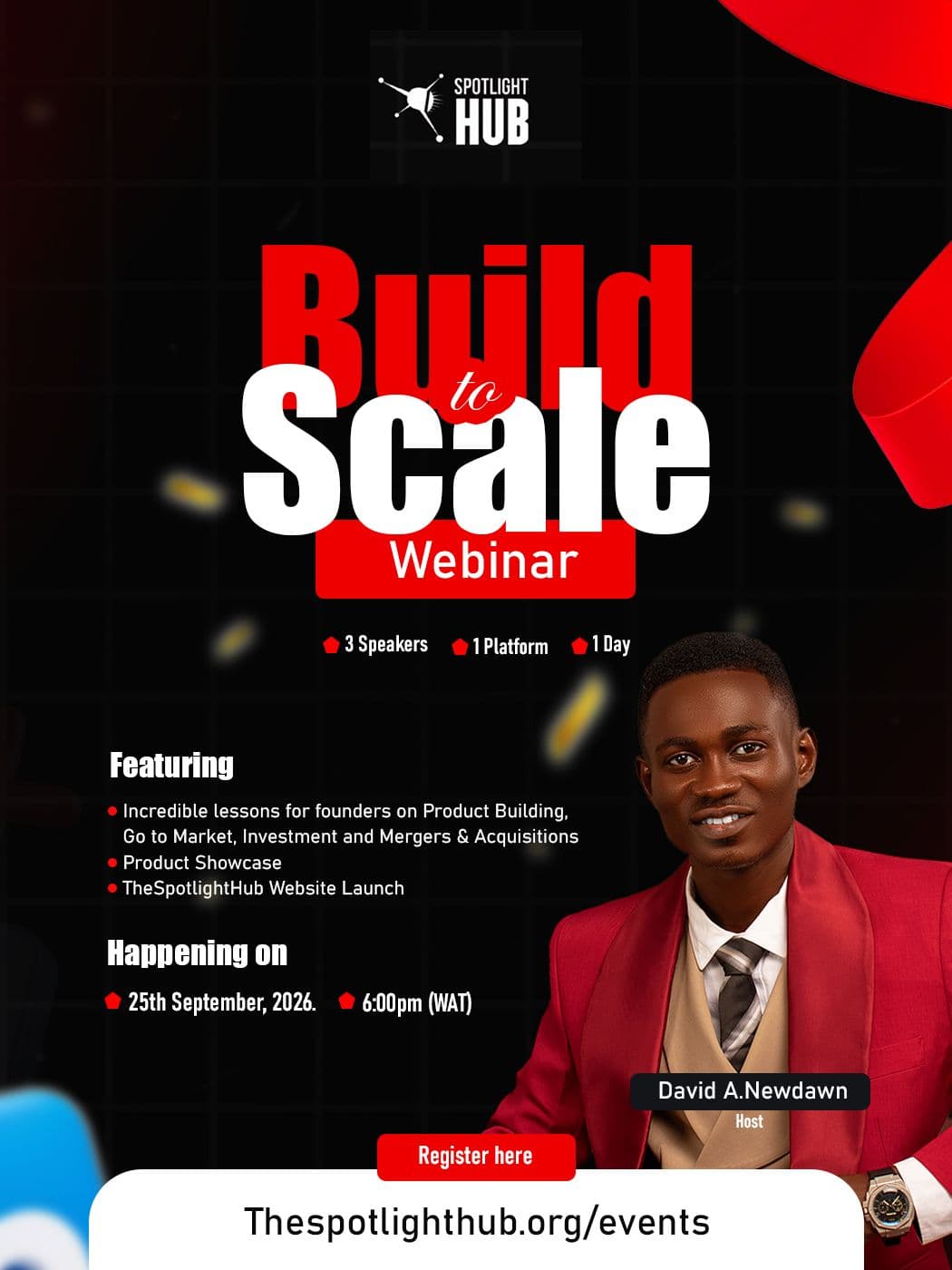
You can register here thespotlighthub.org/events
Stay tuned for more founder stories from TheSpotlighthub.
You can read more founders stories on our website at thespotlighthub.org/blogs and if you are a founder or know any founder interested in sharing their stories, reach us here info@thespotlighthub.org or spotlighthub001@gmail.com
Category
Founder's Spotlight