Loading blogs...

By David Newdawn
15th September, 2026
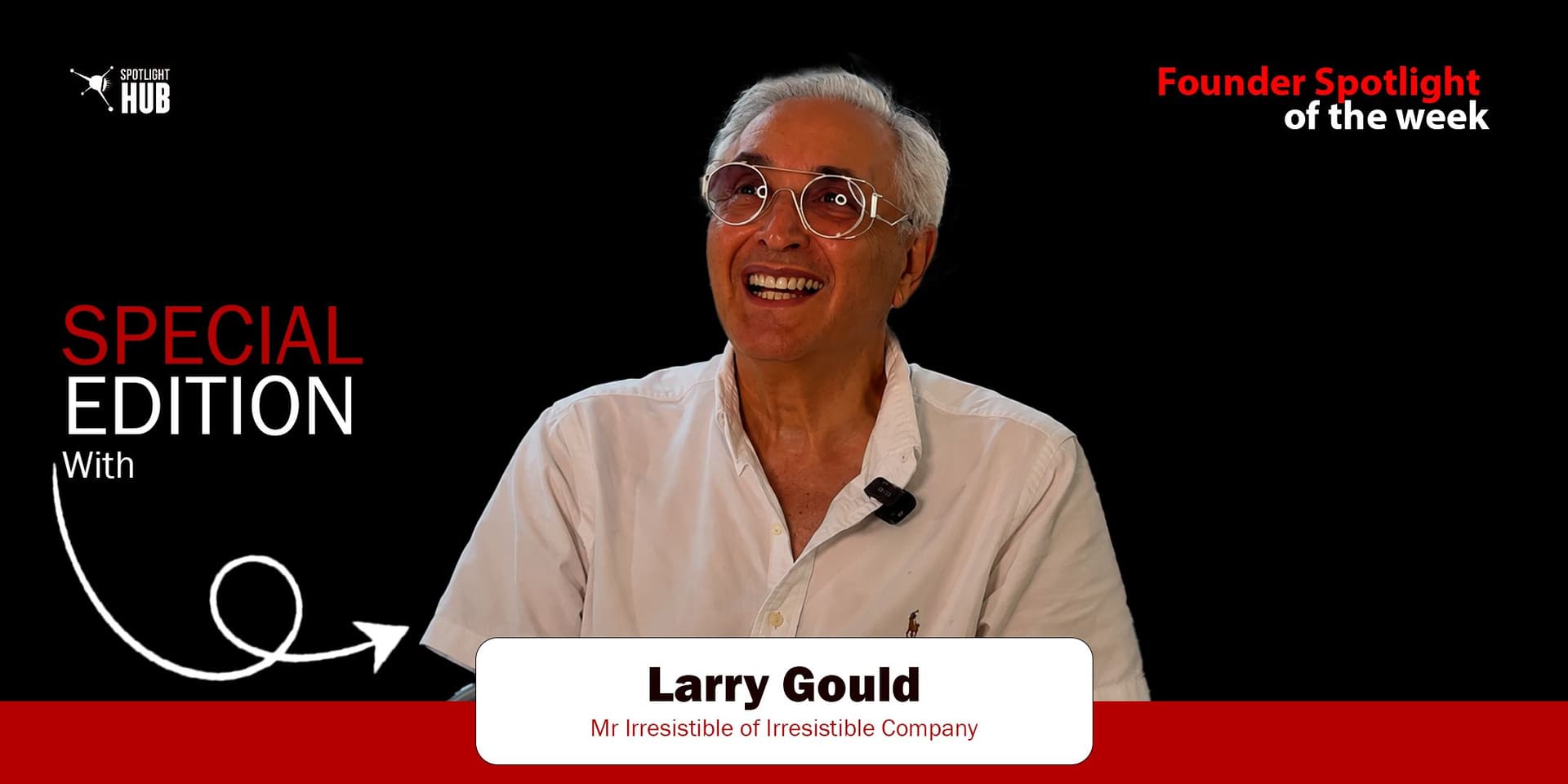
What would you expect from a school dropout at 15, written off in his own middle-class community as one step away from trouble, the kind of teenager families didn’t want their children mixing with. Nothing much! But you’d probably have been wrong.
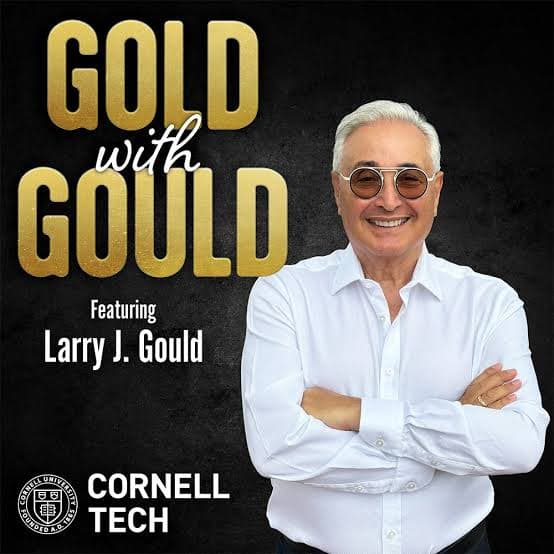
Larry Gould went on to build a career that took him from a department store sales floor to running one of the top companies in the world, not just for himself alone, but for others.
Some conversations don’t come from a founder telling their own origin story alone, they come from someone who has spent decades sitting across the table with founders, watching what makes them succeed and what quietly makes them quit. Larry is one of those people.
Across nearly four decades of building companies, teaching at universities, and mentoring entrepreneurs, he’s distilled everything he learned along that climb into a single word he returns to again and again: Irresistible.
In this conversation with the Spotlighthub Team, Larry didn’t hold back. He talks through the discipline of selling, the loneliness of building, why rejection should never be feared, and the surprisingly honest story of how a school dropout found his way to the top by making himself, and everything he built, irresistible.
If you want to become irresistible builder or build an irresistible product, then this is for you. Lets dive in.
Larry opened with the concept that has shaped his entire career: irresistible, meaning, in his words, “too tempting and too attractive to resist.” He described it as a discipline you have to sit with, literally with pen and paper, staring at the word and asking hard questions about your own product, service, or business, what’s irresistible about working for you, why should someone invest in you.
Most people struggle with the exercise at first, he said, but given time and thought, the answers start to surface. He also recommended turning the same lens outward, auditing competitors to see what makes their offering irresistible, then honestly asking whether your own measures up.
That naturally led him to a second word, one he said tends to make people uncomfortable: selling. He argued that founders in the West especially shy away from the word itself, preferring softer language like “go to market strategy.”
But selling, done honestly, “is not like lying, exaggerating, it doesn’t work,” and success ultimately comes down to execution rather than the product alone, because as he put it, “it’s not the best product that makes all the money, it’s the best sold product.”
Asked how the concept of irresistible actually gets applied in practice, Larry used David’s Suggested product, ZIDWELL, an Ecommerce platform that manages businesses finance, gives them insight into their transactions and helps them make decisions with their money, as a live example.
For a financial platform like that, he said, trust has to sit right at the center of the value proposition, and founders need to be able to show, in his words, “who are the people, and how do they identify” behind the money they’re asking someone to trust them with.
That led into one of the most vivid parts of the conversation, Larry’s advice for founders to challenge themselves the way a skeptical customer would. He described inventing a character he calls Johnny Misery, someone who sits beside you asking why your idea is any good, forcing you to answer the hard questions you’d rather avoid.
“Fold your arms over and become Johnny,” he said, “and then you have to force yourself to answer them.” He pushed the exercise further still, recording yourself giving a presentation of your product, then present it to a friend or family member, even if it feels foolish.
And when rejection comes, and it will, don’t fear it, just “listen and ask them why they don’t like what you’re saying, what is missing, who does it better, and it’ll change your life.”
When the conversation turned to founders just five or six months into building their product, still assembling teams and shaping their first version, Larry got specific about the mechanics of selling itself.
He explained that open ended questions, the kind that start with why, what, who, where, or when, force a real conversation instead of a yes or no answer, and that leaving deliberate silence after asking one, though “not easy for me,” makes people speak back.
These, he said, are learnable techniques, and today founders have more ways to learn them than ever, through books, or more easily now, through hours of podcasts online.
He even shared, half joking, that he leans on AI as a thinking partner when preparing for a sales conversation, describing how he talks it through as if briefing a colleague: “I’m going to visit this customer, this is what they manufacture, this is what they do, this is what I do, this is what I think I should tell them, what suggestions will you have.”
That same resourcefulness came up again when the conversation shifted to financial stress. Larry was direct about what founders should do when money runs low, talk to your bank, ask AI to help map out real choices, and don’t be ashamed to take an interim job just to cover rent and food while you regroup.
“It’s not terrible to have a pause,” he said, “get a job just so you’ve got money and food,” and he promised that every time someone claws their way back, “you get stronger and stronger.”
Larry also had clear, practical advice on team building and product development, grounded in something founders can start doing immediately: research.
Using a simple example, imagining a team setting out to build a mug, he walked through his method, look at the competition, and “write down everything you like about the competitor, and everything you don’t like about the competitor.”
Gather opinions from other people, he said, and if you can’t afford the actual products, print out pictures and compare them side by side, calling it “really an easy and not expensive way of doing research” that teaches you a lot about what you’re actually trying to build.
Perhaps the most personal moment of the conversation came when Larry was asked about a phrase he’s used to describe himself: a successful failure. He didn’t hesitate to share the story behind it.
As a teenager, he failed his driving test eleven times before finally passing, and once he did, he landed a sales job that came with a car, only to have three accidents within six weeks.
Terrified to keep driving, he started taking trains, buses, and hitchhiking to sales visits instead, quietly submitting mileage claims as though he’d been driving the whole time.
What he didn’t expect was that his expenses dropped dramatically while his sales numbers climbed, and when head office called him in, assuming he was in trouble, they instead offered him an award for being the company’s top salesperson.
Faced with the question of how he’d managed it, he admitted the truth. As he put it, “from being honest, in a being not honest in a kind of a way to being honest and failing because I couldn’t do something led me into the fact that I actually got the job as an international sales manager.”
Rather than firing him, the company removed him from driving entirely and promoted him to international sales manager across Eastern Europe, a role that eventually led him to open his own business and become one of the top language and translation companies in the world.
Larry was asked what advice he’d give to someone just starting out, or to his own 21 year old self, Larry’s answer circled back to everything he’d already said. If you don’t enjoy selling, that’s fine, but if you’ve built something you believe in, find companies or partners who can sell it on your behalf, and legally protect your idea before you share it with anyone.
He described the pitch he’d make to a potential partner in simple terms, telling them, “you are the best people for my product, and I’d like to work with you, or for you, or with you, preferably, and we have a conversation.”
He also encouraged founders not to be afraid to approach a company as a potential partner, even if the idea sounds unconventional at first, and to use AI to research legal protections when a lawyer isn’t affordable.
Before the conversation closed, the Spotlighthub Team asked Larry for his advice for companies just starting out or about to launch.
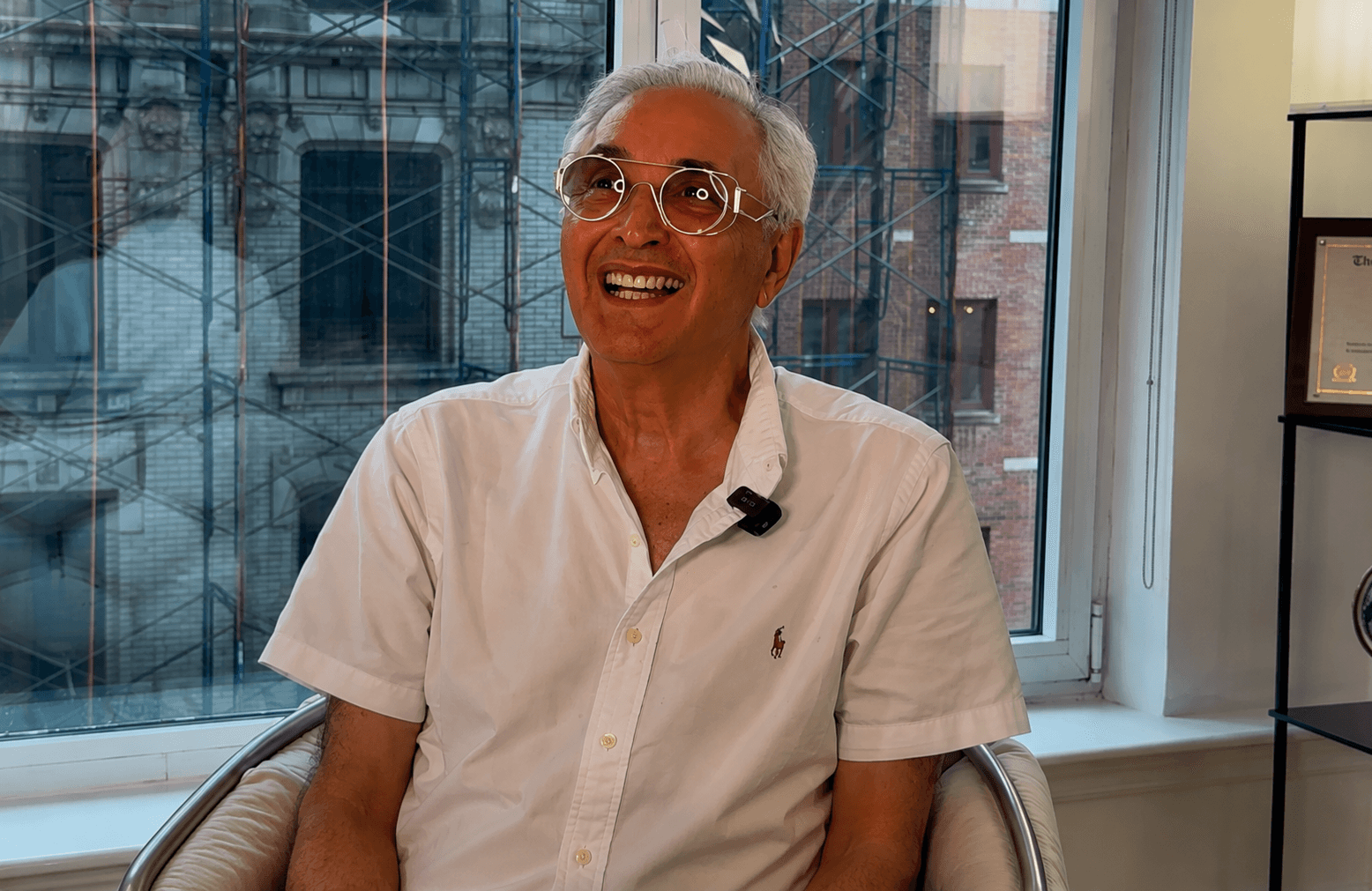
His answer was refreshingly simple, “you should go online and you look up all those that are doing what you do, and you take from all those websites who are doing what you’re going to do, their best ideas, and incorporate them into your website.”
We are preparing for the Build to scale webinar and our website platform launch on September 25 at Thespotlighthub.
Building a product is one thing. Building the business around it is another.
At TheSpotlightHub, we believe the modern builder needs to see beyond the product.
A 360° builder is not just someone who can build a great product. It is someone who understands the problem, the users, the market, distribution, funding, growth, and the business needed to make that product succeed.
That is the idea behind Build to Scale.
On 25 September 2026, we are bringing founders and industry experts together to explore what it really takes to move from building a product to building a business that can grow.
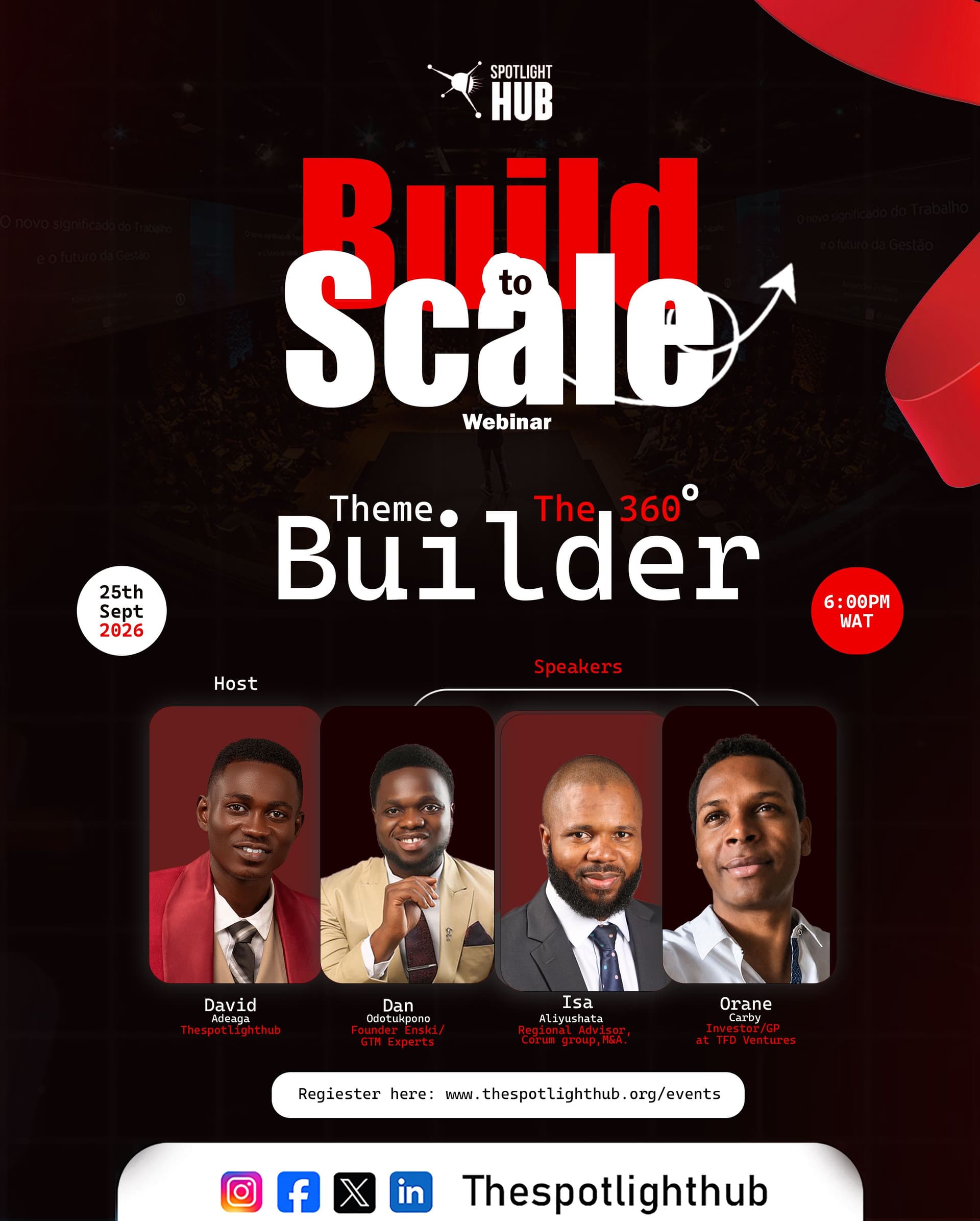
Product, GTM, Investment, M&A, Growth.
And as part of the experience, Build to Scale will also mark the launch of TheSpotlightHub platform, created to help founders access visibility, mentorship, opportunities, resources, and a community of other builders.
If you’re building, planning to build, or part of a startup team, this conversation is for you.
Register for Build to Scale and join us on 25 September.
www.thespotlighthub.org/events
See you there.
Category
Founder's Spotlight