Loading blogs...

By David A. Newdawn
15th June, 2026
Hello Builder,
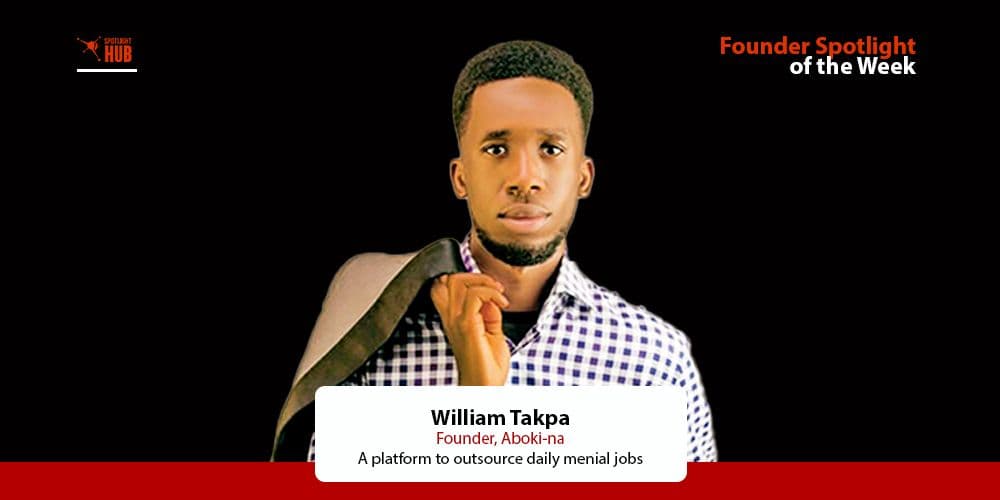
In our recent Founder’s Journey conversation, we had an interesting interview with William Takpa, founder of Aboki Na, to unpack how everyday frustrations quietly became the blueprint for a scalable microservice platform.

Nearpays has decided to put a smile on the face of every founder, entrepreneur, trader, freelancer, and business owner by rolling out the Nearpays FX feature that allows you to transact in USD, and you have access to owning a dollar card to make subscriptions and other payments in USD.
Register with Nearpays now to give you access to experience smooth international transactions and payments.
———————————————————————————————————
Let’s dive in.
What began as torn slippers, missed artisans, and broken routines in a quiet Nigerian city evolved into a thoughtful exploration of how technology can organize informal work without disrupting the people who depend on it.
What unfolded was not a flashy startup story but a grounded lesson in building with context, navigating limited resources, designing for non-tech users, and learning how storytelling, feedback, and resilience shape products that actually work. William’s journey offers a rare look into what it really takes to digitize overlooked systems, one local problem at a time.
Thespotlighthub:
Good to meet you, William. Can you introduce yourself and share how your path into tech began?
William:
“My journey into tech wasn’t planned. I actually studied geology and mining, and after graduation and NYSC, I spent over a year searching for a job that never came. Shortly after COVID, I got tired of being idle and decided to start learning digital marketing because it felt like the easiest way to start earning through tech.
“Over time, marketing exposed me to real human problems, and that led me straight into product management. Today, I’ve built products that people across Africa and Europe use, and Aboki Na is a result of the problems I personally lived through.”
“I didn’t want to just market solutions; I wanted to build them.”
Thespotlighthub:
Where did the idea for Aboki Na come from?
William:
“I was working remotely in Jos, and I realized I had small problems that became big when I couldn’t solve them. If my slippers tore, I couldn’t fix them because the aboki wasn’t around.
My clothes needed repairs, but the tailor never passed when I was home. I realized this problem didn’t just apply to me; over 50 people across different demographics around me said they had the exact or similar issue.
“That moment convinced me that this wasn’t just a personal inconvenience. It was a Nigerian problem waiting for a solution.”
“I saw a national problem hidden in everyday frustration.”
Thespotlighthub:
How does Aboki Na function, considering many service providers aren’t tech-savvy?
William:
“I built Aboki Na around the realities of Nigeria. Instead of forcing artisans to use smartphones or apps, we introduced agents. Users request a service, agents receive it, contact the nearest service provider, and coordinate everything.
We limit operations to a 2.5 km radius to guarantee speed. “It’s simple, practical, and built around how Nigerians already live, harnessing the power of community.”
“We didn’t force technology on anyone; we wrapped technology around their reality.”
TheSpotlighthub:
How has your marketing background shaped your founder journey?
William:
“Marketing taught me how to communicate emotionally, not just technically. That skill saved me during the Startup Abuja Hackathon. I went to pitch my idea, but I had a major wardrobe disaster.
As a marketer, I improvised, dropped my script, and spoke directly to the judges and the audience about a problem every Nigerian understands. The hall literally clapped 90 seconds into my pitch.
“That’s when I realized many founders build great products but struggle to tell great stories.”
“Sometimes, storytelling is more powerful than slides.”
Thespotlighthub:
How did you build your team and navigate remote work challenges?
William:
“I built my team through TechSynergy, where junior tech talents collaborate on real projects. That’s how our 7-man team formed.
We’ve found remote work in Nigeria rather challenging due to light issues, poor networks, limited devices, and inconsistent availability.
“As the founder, I had to wear multiple hats: PM, leader, marketer, communicator, and sometimes temporary front-end dev when necessary. I learned very quickly that being a founder means fixing whatever can stop progress.”
“At some point, every founder becomes a firefighter.”
Thespotlighthub:
How did you structure the pricing and revenue model?
William: “I kept the pricing low because this is a microservice platform. Most tasks range from ₦100 to ₦2,000. The commission breakdown is simple: 70% for the service provider, 15% for the agent, 10% for Aboki Na, and 5% for overhead costs.
“My research shows the micro-service market is worth over ₦800 billion in Nigeria. Even 1% of that is revolutionary for a business in today’s landscape.”
“Small gains at scale can build an empire.”
Thespotlighthub:
How important has user feedback been to the product?
William: “Feedback is everything. Negative feedback, especially, has saved us from wasting time and resources. One user told us to drop third-party payment integration for now and let customers transfer to a single account.
That idea saved us two weeks of development. “The users see the product from angles I never would.”
“Perfection doesn’t come from the founder; it comes from the users.”
TheSpotlighthub:
What new skills did building Aboki Na force you to develop?
William: “I had to learn stakeholder management, investor communication, leadership, and even some technical things. I learned when to be gentle and when to be firm. I learned to keep the team motivated despite delays.
“Building Aboki Na has stretched me and also shaped me.”
“Leadership is knowing when to say ‘please’ and when to say ‘I need this done.’”
Thspotlighthub:
What are the biggest challenges you’ve faced?
William:
“The first challenge was building without mentorship. I was learning everything alone, and it slowed me down. The second challenge was funding.
Every step, from development to infrastructure, costs money, and we were bootstrapping almost everything.
“Even now, funding remains a strategic priority, though we’re already in conversations with potential partners.”
“If I had mentors earlier, I would have avoided many mistakes.”
Thespotlighthub:
What is your advice to young founders still at the idea stage?
William:
“My advice is simple: plan well, but don’t overthink. Start building. Be ready to learn any skill your team needs. Take care of your mental health; burnout doesn’t make you a hero. And never neglect the spiritual aspect of building. Strategic steps require a certain amount of power.”
“A founder who is not whole cannot build a whole company.”
Thespotlighthub:
How do tech and marketing complement each other in your journey?
William:
“For me, tech and marketing are inseparable. Marketing gives tech life, and tech amplifies marketing. When both work together, your product doesn’t just exist; it stands out. Many times, the loudest product wins, not the most sophisticated one.”
“It’s not tech versus marketing; it’s partnership.”
Thespotlighthub:
Where do you see Aboki Na in the future?
William:
“I see Aboki Na growing beyond one city and eventually beyond Nigeria. Every country has informal workers and everyday service needs. If we can organize this sector efficiently, we can scale into a global solution. That’s the goal.”
The Spotlighthub celebrates founder stories across all sectors, from tech to agriculture to community building. We believe every field needs innovative founders willing to solve hard problems.
If you have a story to share or know someone who does, reach out to us at Spotlighthub001@gmail.com
See you in the next Episode.
Category
Founder's Spotlight