Loading blogs...

By Vera Agodi
12th August, 2026
Every founder’s journey starts somewhere, but it rarely ends where it started.
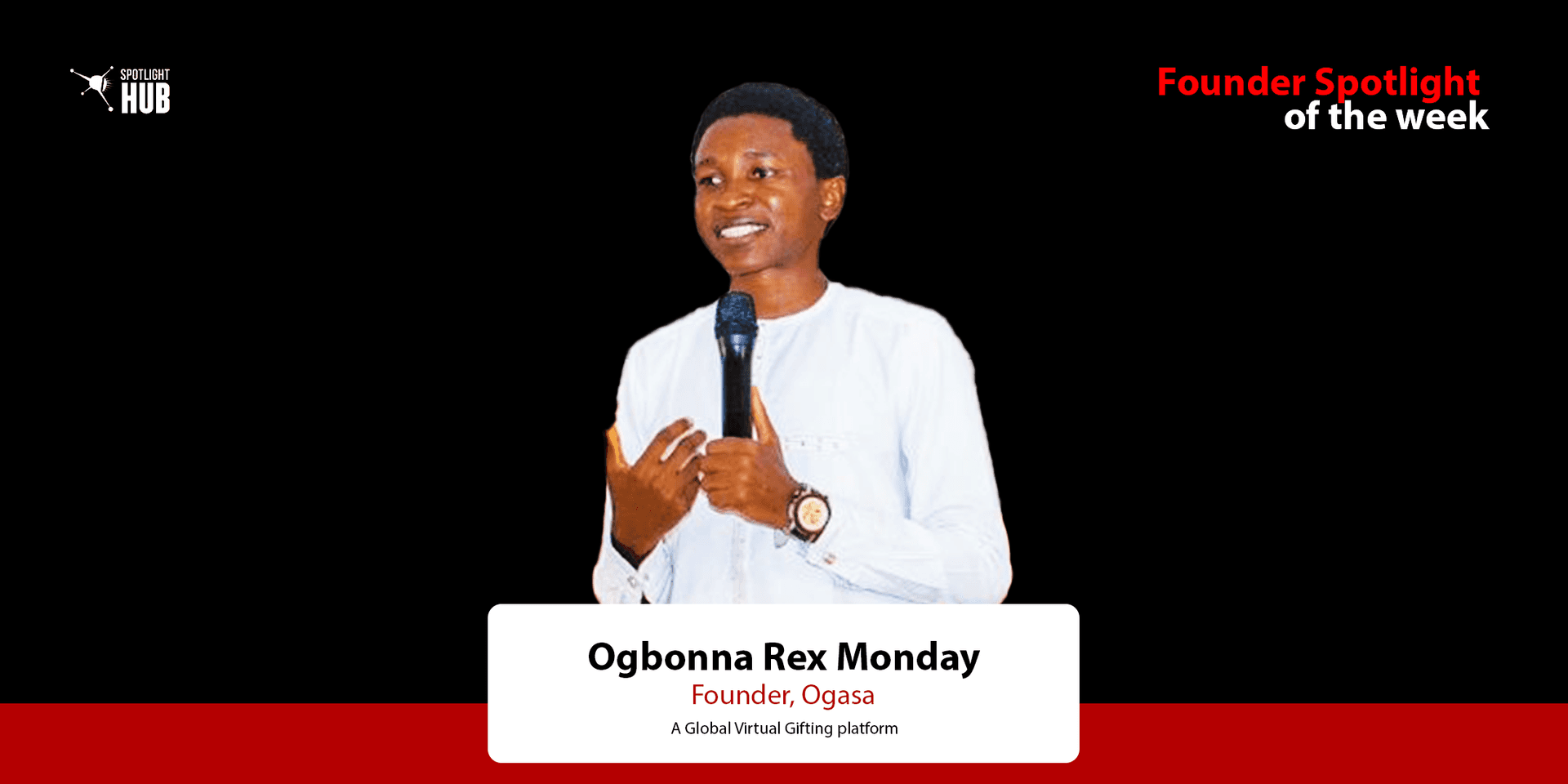
For Rex Monday, founder of Ogasa, the journey began in network marketing before moving through crypto, ecommerce, bill payments and fintech. Some ideas worked for a while. Others failed. But each experience shaped the product he is building today.
In our conversation with Rex, he shared how failure influenced his approach to business, how Ogasa evolved into a virtual gifting platform, the challenge of educating users about a new behaviour, and why he believes founders should keep building, learning and failing fast.
I started my entrepreneurial journey in 2016, initially through network marketing. I cannot write my history without mentioning it because it gave me the foundation that eventually pushed me into technology and entrepreneurship.
I eventually left network marketing because I wanted to build something consistent that I could be known for over the long term. I believe in multiple streams of income, but I also believe a person should have something they are primarily known for.
In 2019, I ventured into crypto and blockchain. We had a physical presence and I wanted to build the largest decentralised exchange in Africa, but the business eventually failed. The major problem was the team. Some people were more interested in short term gains than the bigger vision.
Although the business failed, the experience strengthened me. It taught me blockchain in its raw form and showed me the importance of having the right people around a vision.
Ogasa started in 2019 as an ecommerce business. We later moved into bill payments, airtime and data, and eventually added other services including international top up, flights and investments.
But we realised that having a good product was not enough. Our sales started declining because people already had banks and fintech platforms providing similar services. We were not solving a strong enough problem to keep users coming back.
That forced us to rethink the business.
Between 2023 and 2025, we began developing the idea of a global virtual gifting platform. We realised that people naturally love to celebrate and be celebrated, but physical gifts can be expensive, inconvenient and sometimes repetitive.
So we asked ourselves, what if gifts could be virtual, converted into money and still preserve the memory of the celebration?
That became the foundation of Ogasa’s current direction as a social celebratory application.
We want to make celebrating people easier, regardless of distance.
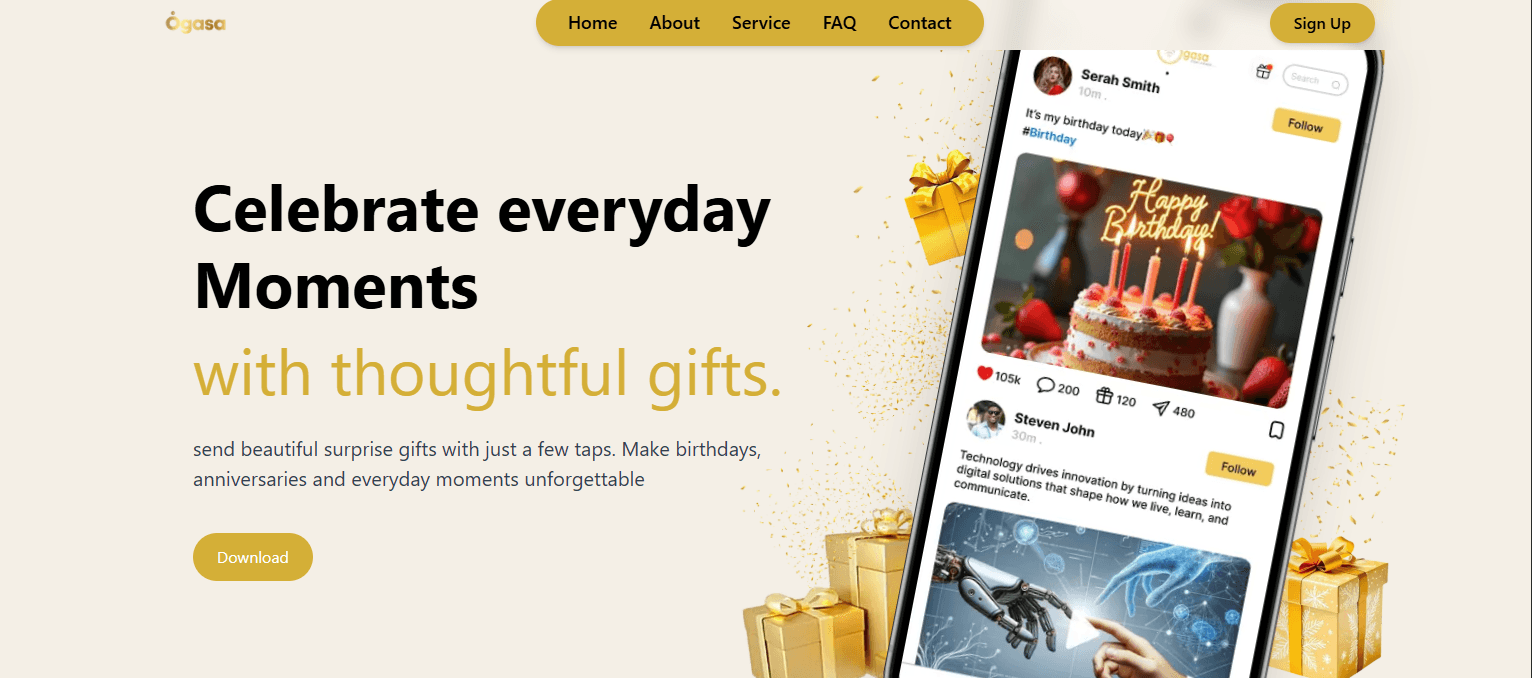
If someone is celebrating a birthday, wedding, anniversary or another important occasion, people connected to them can send virtual gifts. Those gifts can eventually be converted into money and withdrawn by the recipient.
It also helps solve the problem of duplicated physical gifts. If five people buy someone the same kind of physical gift, some of those gifts may go unused. With virtual gifting, the recipient receives the value and can decide how to use it.
We also want to remove the awkwardness of people posting their account numbers on social media because they want people to send them birthday money.
Ogasa can notify connected friends and family before and on the celebration day, allowing them to prepare and send gifts while creating a digital memory of the occasion.
One of our biggest challenges has been user retention.
When we started with airtime and bill payments, people came because friends and family supported us, but they did not necessarily have a strong reason to keep coming back. That showed us that we needed to build something more scalable.
With virtual gifting, the challenge is different. People are familiar with physical gifts, so we have to educate them about a behaviour that is still relatively new.
However, younger users are already becoming familiar with virtual gifting through livestream platforms, so we believe the behaviour can grow.
We are also building a social layer around the platform with short form STEM, creativity and innovation content. We want the platform to be properly moderated and for the algorithm to promote valuable and innovative content rather than simply rewarding whatever goes viral.
Users give gifts through a points based system, and creators or celebrants can convert those gifts into money through their wallets.
Ogasa currently takes a 1% conversion fee.
We also have plans for additional revenue streams, including advertising and creator payouts based on factors such as views and watch time.
The bigger vision is to build an ecosystem where creators and users can benefit financially from their participation.
I have always believed in failing fast.
If we want to do something and it is going to fail, I would rather it fail quickly so we can learn, make the necessary changes and move forward.
The challenges have not stopped. Every day brings something different, but I have learnt that business itself is about solving problems. The problems simply come in different forms.
That mindset has helped us move from one version of Ogasa to another instead of abandoning the entire idea whenever something does not work.
I do not want to build something that exists only for a short period.
We want Ogasa to become a long term infrastructure for social celebration and connection. Technology will continue changing, so the product will also continue evolving.
Even though some of us may be here in the next 50 or 100 years, I want Ogasa to still exist in whatever form technology takes at that time.
That is the kind of business I want to build. Not something that comes and disappears, but something that can continue to evolve with the world.
I would tell founders not to be afraid of challenges. Every entrepreneur is solving a problem, and the problem will always come in different dimensions. You just have to understand that challenges are part of the journey.
For me, I believe in failing fast. If you want to do something and it is going to fail, let it fail fast so you can learn from it, make the necessary changes and move forward. Do not spend years holding on to something simply because you are afraid to admit that it is not working.
I have experienced failure myself. I have built something that failed, learnt from it and continued building. That experience eventually became part of what helped me get to where I am today with Ogasa.
So, keep learning, listen to your users and be willing to change direction when the evidence shows that you need to. A product can start one way and become something completely different when you understand the real problem you are trying to solve.
My previous experience taught me that the people around you can determine how far a business goes. In my earlier venture, the team was not completely aligned with the bigger vision. Some people were focused more on short term gains, and that contributed significantly to the failure.
That experience strengthened me, taught me blockchain in its raw form and made me understand that building a company is not just about having an idea. You need the right people, the right mindset and the willingness to keep rebuilding when something does not work.
These two sections are important because they give the newsletter the founder lesson behind the Ogasa story, rather than making it only about the product.
Ogasa did not become what it is today because the first idea was perfect.
It evolved through failure, feedback, experimentation and continuous iteration.
From network marketing to blockchain, ecommerce, fintech and now virtual gifting, every stage gave Rex another lesson to apply to the next.
And perhaps that is one of the strongest lessons from his journey: you do not always need to have the perfect idea from day one. You need the willingness to keep learning, listen to your users and build again when something does not work.
Building anything meaningful takes clarity, patience, and the courage to keep showing up even when things are uncertain.
At TheSpotlighthub, we’ll keep sharing stories and insights from people who are building relevant products and solving real problems.
Until next time, keep building what matters.
Category
Founder's Spotlight