Loading blogs...

By Vera Agodi
26th August, 2026
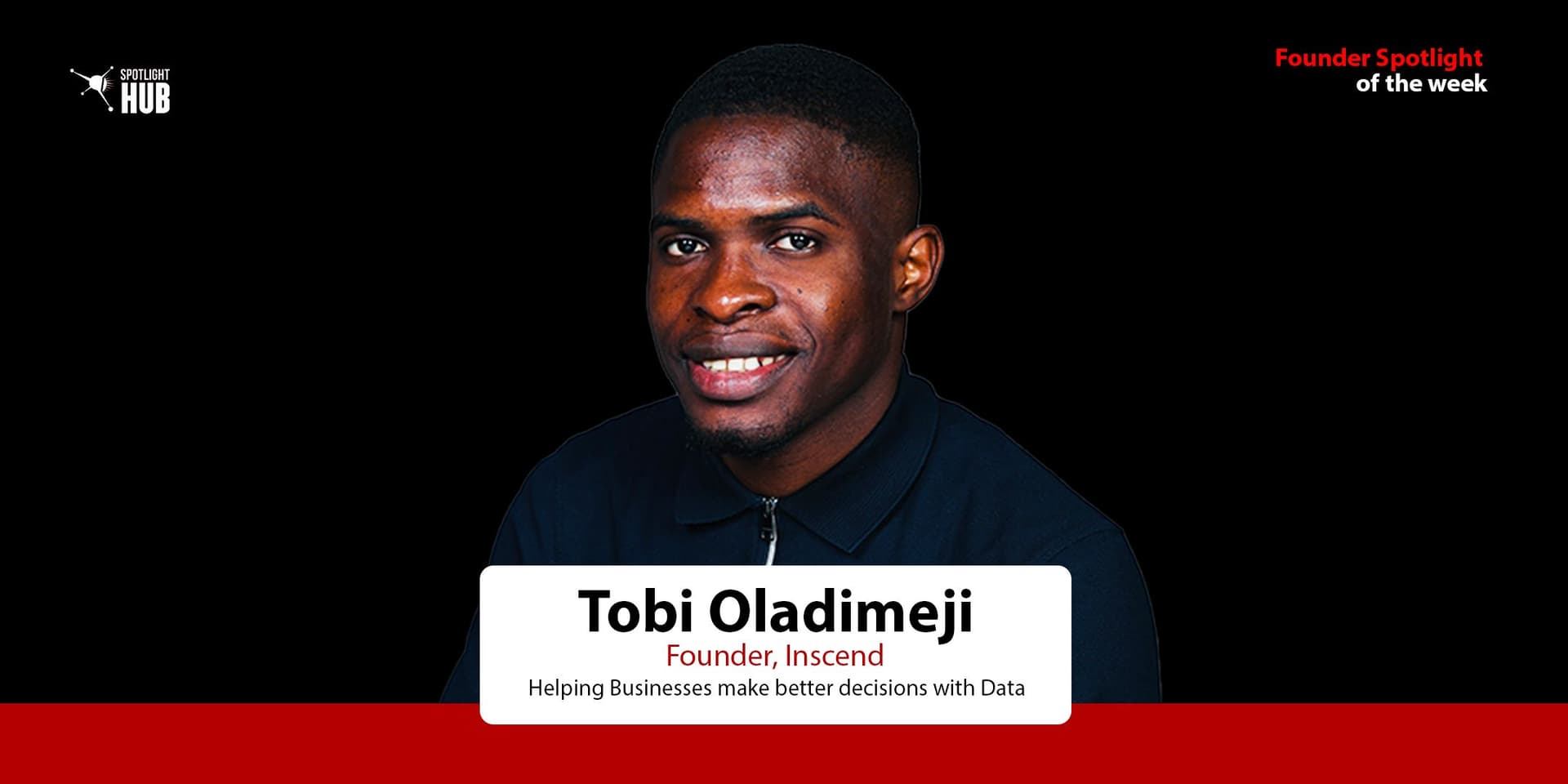
There is a particular kind of ache that only a founder recognizes: the ache of watching someone you love make decisions in the dark. For Tobi Oladimeji, that someone was his mother, a small retailer back home in Nigeria, hunched over a notebook, guessing what decision to make tomorrow because today’s data gave her no clarity.
That quiet, everyday struggle became the spark behind Inscend, a platform built to hand small businesses the same data power that big companies pay thousands of dollars a month to access.
In this candid conversation with the Spotlighthub Team, Tobi opens up about Inscend’s real journey. A pivot, a devastating three month setback, and the philosophy that’s carried him through it all. Grab a seat, this is a founder story worth reading, an unpolished and honest conversation.
Tobi traced the whole idea back to his mother, a small retailer who sells food products back home in Nigeria. Growing up, he’d follow her to the market and watch her writing down every sale by hand, and yet, even after years of doing it, she was still guessing her way through the business. That was the pain point that never left him.
As a computer science student, he was already drawn to data, and that curiosity carried him through jobs in Germany, India, and the US before he landed at PwC, one of the big four consulting firms. There, he watched large companies pay around five grand a month just to maintain a dashboard, and it struck him that if the process was valuable enough for big firms to pay for, someone should be solving it for small businesses too.
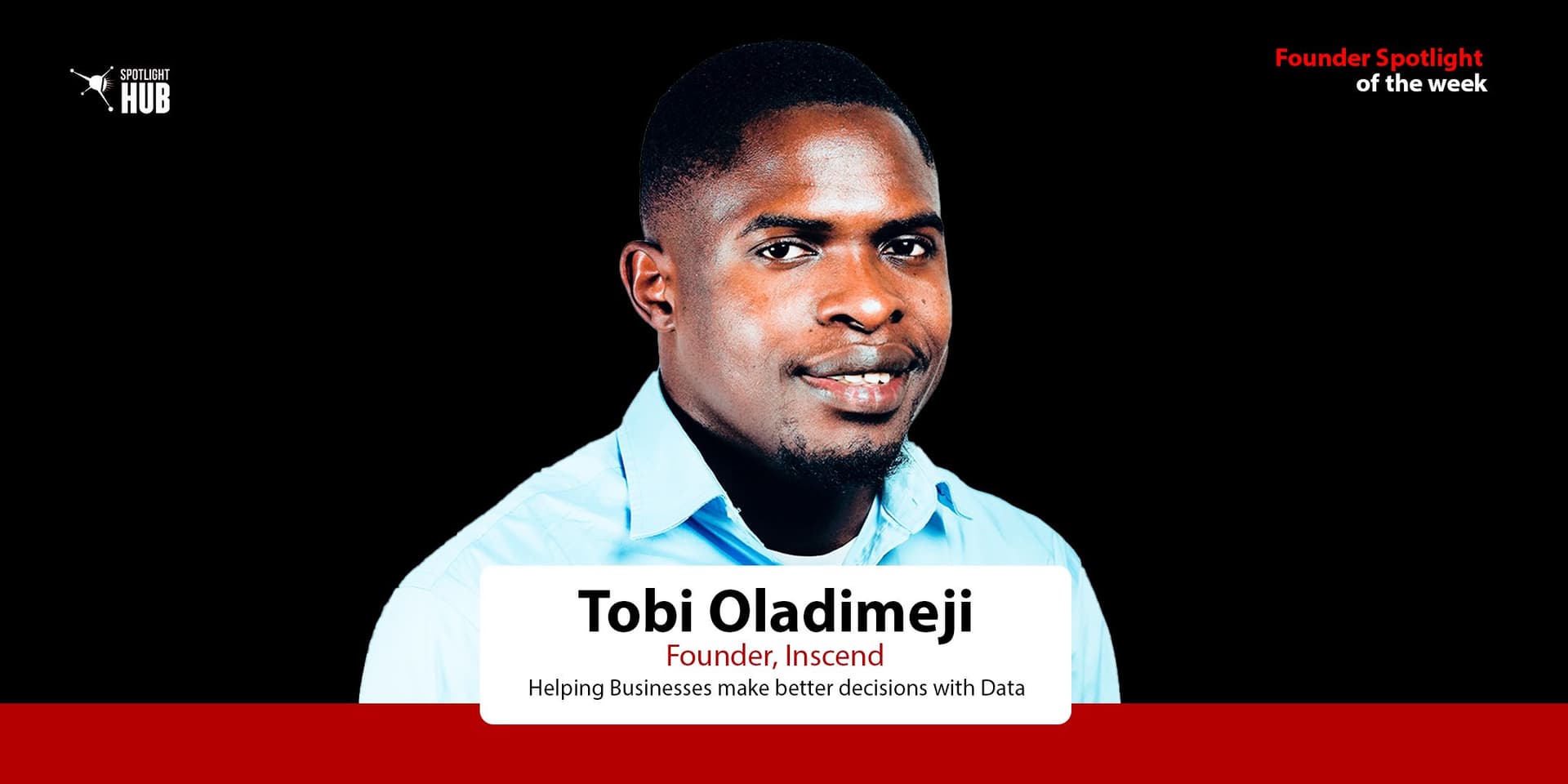
He was quick to point out that Inscend hasn’t been a solo effort. His CTO is a close friend of eight years, his software engineer studied in the same department as the two of them, and his advisor was even a co-founder before the team restructured.
“If a company can find this kind of process so useful, then somebody should try to solve it for the smaller companies like my mom that are not able to know what their data is saying.”
He believes AI has quietly eroded trust everywhere. Reaching people has become so cheap that emails, recommendations, almost everything, feel less credible than they used to. Inscend, he explained, is built to push against that by making sure every recommendation is transparent and backed by data, not guesswork.
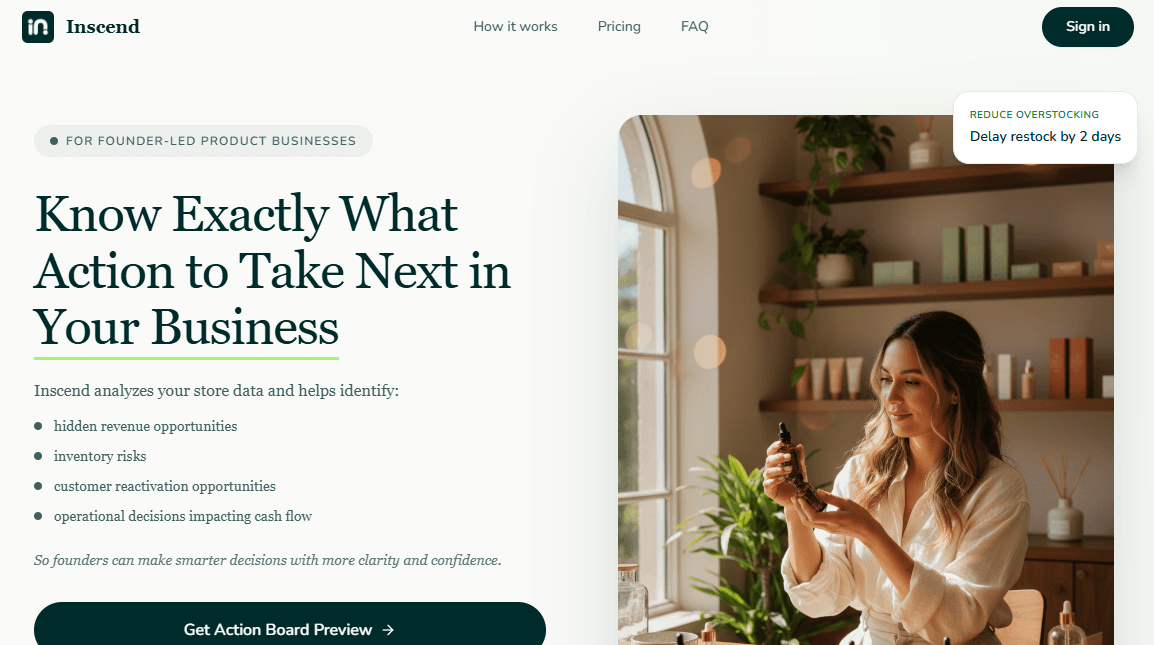
He also stressed that data alone is never the full picture, because there’s context only the business owner has, details a system simply can’t see. That’s why the team built Signals, a feature that lets customers add their own operational rules.
He described a customer whose system recommended reordering 15 units, only for her to point out that her supplier sold strictly in multiples of five. She added her actual minimum order quantity, 75 units, as a signal, and Inscend instantly recalculated its recommendation to match.
Before Inscend, Tobi’s team had already built and piloted a different product with over 20 small retail businesses, only to discover it wasn’t solving the problem it was meant to. Rather than push forward blindly, the team went back to basics. Most of them, Tobi included, went out individually to physical stores to talk to customers face to face, gathering feedback on why people weren’t converting or paying. That grinding, door to door process is what gave rise to Inscend.
Tobi said his guiding question throughout product development has always been how to make something so simple that a new user instantly knows what to do next, because retailers move fast and don’t have time to figure things out. Everything the team builds, he said, comes back to one idea.
“Inscend is know for Simplicity, accuracy, trust.”
For Tobi, success has a face, and her name is Oyeta. He met her in Vancouver after pitching an earlier version of the product on stage, and she followed up, tested it, and got genuinely interested.
She’s a beauty entrepreneur with over ten years of experience running a successful business, and her feedback has quietly shaped what Inscend looks like today. She’s now officially part of the company as an advisor, with a stake in the business.
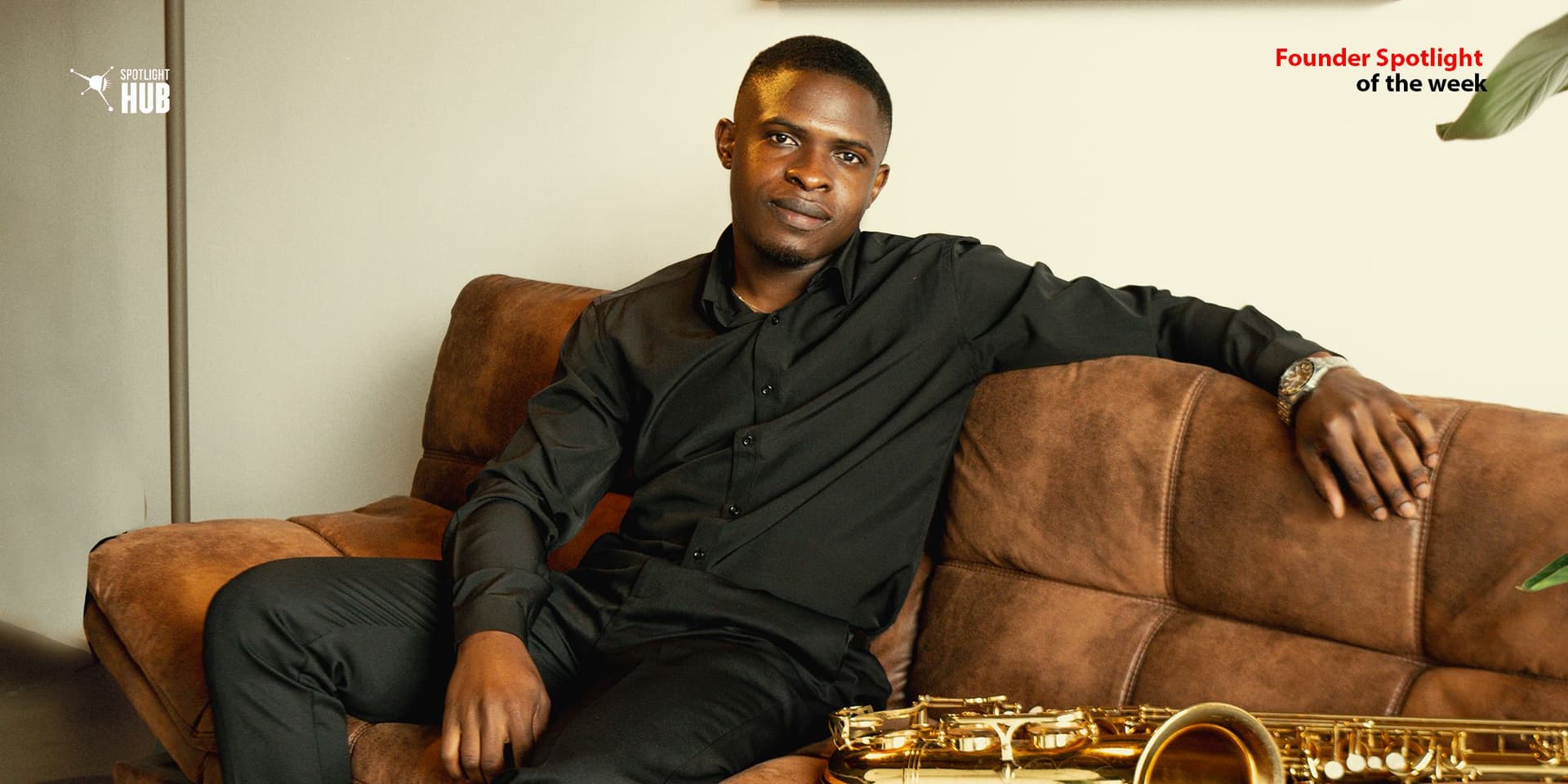
Beyond Oyéta, Tobi pointed to more than 10 active pilots currently running, with several already moving toward paid plans. He said that traction is especially encouraging given how quickly Inscend has progressed: development only began in November, the product was approved for Shopify in May/June, and pilots started in July.
Inscend has also since signed a referral and development agreement with SHOPLINE, adding another potential distribution channel as the company moves from early testing toward paid adoption.
“That is a signal that this is solving a problem.”
Tobi didn’t shy away from the hardest chapter of the story. His AI engineer, who had been working on the earlier product, left right as the team began building Inscend.
Since AI is the core foundation of the product, that departure brought development to a complete stop from December to February while the team searched for a replacement. The fallout wasn’t just technical either, he said, it also cost the company partnerships that had already been agreed on, simply because the product wasn’t moving.
Since bringing on his new engineer, Sami, Tobi has stayed personally involved at the front of the product, prototyping over weekends and pushing features as pull requests for his team to review and build on, rather than stepping back once the crisis passed.
“We’re back.”
Partnerships, Tobi said, have become one of the biggest skills he’s had to develop, he currently manages more than 20 of them, and each one requires real negotiation, figuring out what actually works at the company’s current stage.
That same thinking has shaped his conversations with investors over the past few months, where the focus has been less on raising for the sake of it and more on finding the right fit for where Inscend is today.
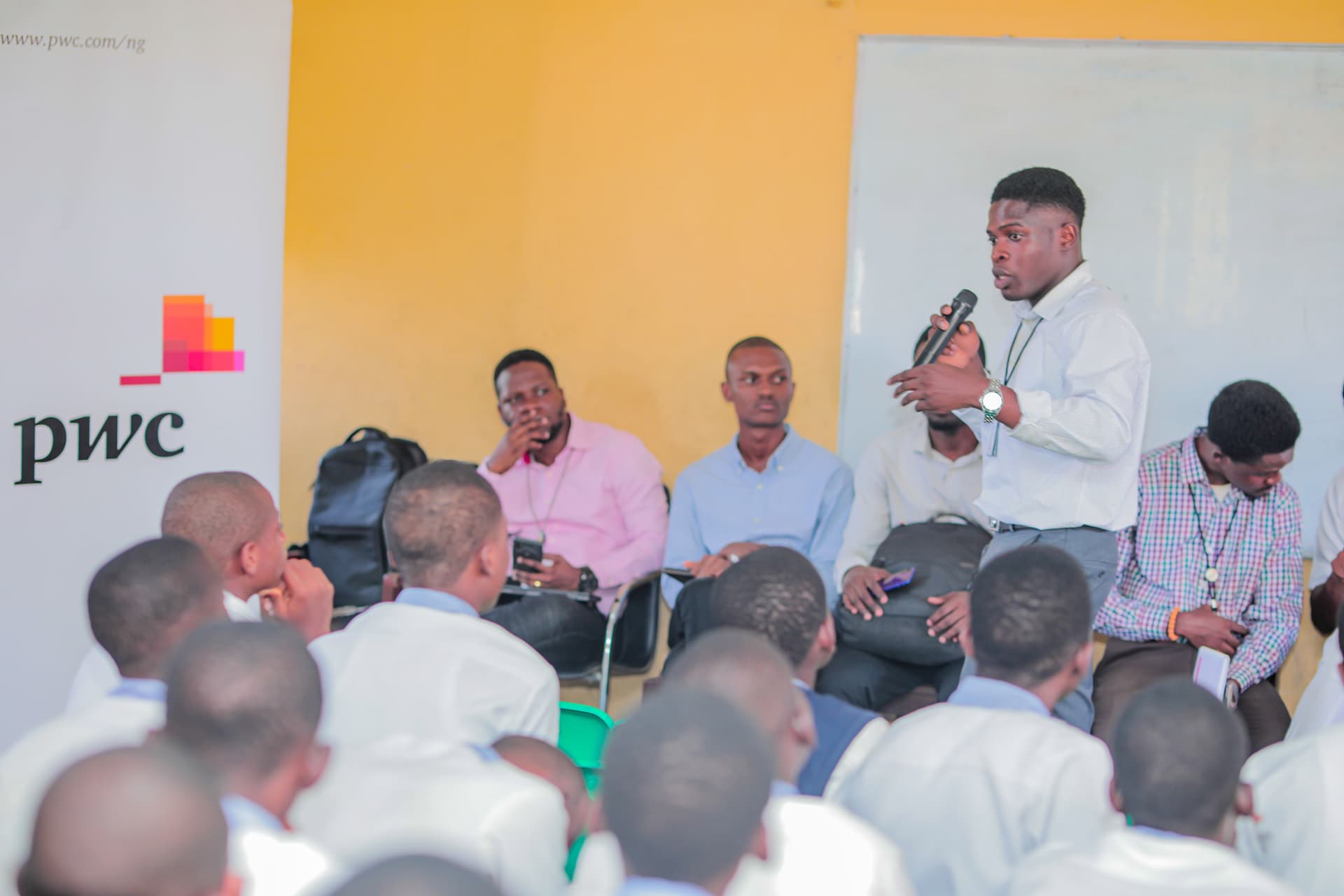
But the skill he returns to most is product thinking, especially with AI making it possible for someone to build a competing platform in a fraction of the time it took him. He said he asks himself the same question almost every day.
“A question I ask myself very often is, What is our unique proposition?”
He described partnership in simple terms, as a value exchange, figuring out what he needs at a given stage, who can provide it, and what he can offer in return. He argued that in the AI era, no founder should try to build everything alone, pointing to how platforms like ChatGPT have become hubs where countless tools now plug in rather than compete from scratch. His advice was to find your niche, stay in it, and look for others doing the same.
That philosophy is playing out in Inscend’s work with Duke Analytics, an infrastructure partner helping the team expand its integrations faster than it could alone. For an early stage company, he said, the goal should always be getting closer to customers, not further away.
“Partnerships is really value exchange.”
His long term vision comes down to one word: accessibility. He wants Inscend to become the tool every retail business owner turns to instead of guessing, a place they go to ask, simply, what should I do today. Small businesses, he pointed out, have been overlooked for a long time, without the same intelligence larger companies use to make confident decisions.
He shared a line he repeats often to the founders he speaks with, that a business should never be something that just happens to you. Instead, he said, you should be able to predict outcomes clearly enough that when you pitch investors, you’re not guessing either, you’re showing them what has already worked.
“You are not meant to let your business happen to you, You should be able to predict your next moves leveraging data.”
Tobi treats feedback, positive or negative, as something too valuable to ignore. His view is blunt: if you’re not getting feedback, something is wrong. He recalled one of Inscend’s earliest testers, who initially refused to engage with the product, and how simply asking him why turned that refusal into a genuinely useful insight about the product’s direction.
Whatever ends up blocking a customer from making a decision faster gets treated as feedback worth prioritizing, he said, which is also why the team leans on one on one onboarding rather than generic answers, so they can understand each founder’s specific situation.
“If you don’t get feedback, then I think you should stop building.”
Tobi was candid that most of what he’s learned hasn’t come from books alone, but mostly from practicing, failing, and getting things to actually work. Still, a few books stood out to him. He credited Atomic Habits for teaching him ownership over his own actions, and Zero to One by Peter Thiel for shaping how he thinks about scaling a company from nothing.
He also spoke about his faith, saying that as a Christian he leans heavily on the Bible, and the book of Proverbs in particular, for the kind of steady wisdom that reassures him even a single verse can carry real weight.
“The book of Proverbs is a wise one.”
Tobi’s advice was disarmingly simple: stay optimistic, because there’s no such thing as failure, only learning. Whatever doesn’t work today, he said, should be carried forward into the next chapter rather than treated as an ending, since every stage of life comes with its own version of you.
He tied this directly back to Inscend’s own history, pointing to a past product the team had quietly shelved that recently resurfaced as a proposal from someone who found genuine use for it. To him, that was proof that nothing built along the way is ever truly wasted.
“There’s nothing like failure, there’s only learning.”
________________________________________________________________________________
TheSpotlighthub is gearing up to launch its own website during the Build To Scale webinar on 25 September, marking the next stage of its mission to build a full ecosystem for early stage founders, offering visibility, opportunities, consultation, and mentorship, all in one place.
Stay tuned for more founder stories from TheSpotlighthub.
Category
Founder's Spotlight